How AI Transcription Enhances Accessibility and Compliance in Media
In the media industry, the demand for accurate, efficient, and accessible content has become more critical than ever. Whether it’s news broadcasts, podcasts, video content, or live events, ensuring that these materials are both accessible and compliant with legal standards is essential for organizations. AI event transcription plays a pivotal role in this transformation by automating the transcription of spoken content into text. AI transcription not only saves time and effort but also enhances accessibility for people with disabilities and ensures compliance with regulations such as the Americans with Disabilities Act (ADA) and GDPR.
In this article, we will explore how AI transcription enhances accessibility and compliance in the media industry. We will look at its key features, challenges, and solutions while providing technical comparisons and structured lists for a more in-depth understanding of its benefits. This includes compliance with accessibility laws and how AI transcription ensures inclusive media for all.
The Role of AI Transcription in Accessibility
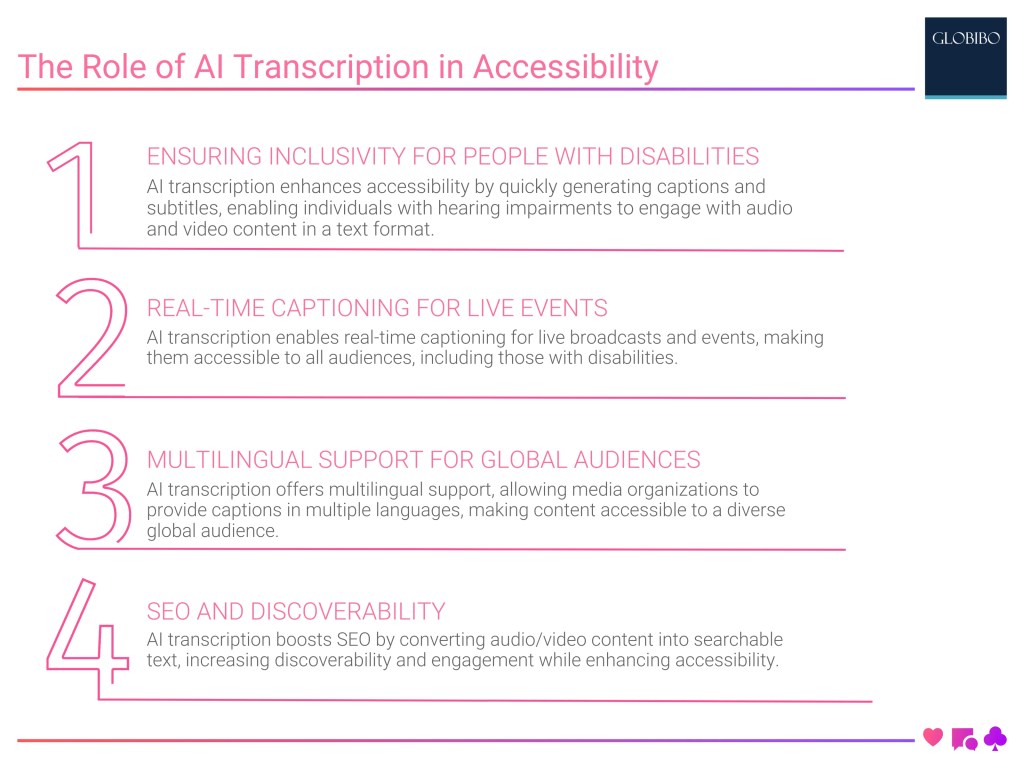
1. Ensuring Inclusivity for People with Disabilities
One of the most significant ways AI event transcription enhances accessibility in media is by ensuring that people with disabilities can access and engage with content. For individuals with hearing impairments, transcriptions and captions enable them to consume audio and video content in a text format. AI transcription tools can quickly generate captions and subtitles for media content, making it accessible to a wider audience.
Legal Mandates for Accessibility
In many countries, accessibility laws require media organizations to provide accessible content for people with disabilities. For example:
- The Americans with Disabilities Act (ADA) in the U.S. mandates that media platforms ensure accessibility for those with hearing impairments by offering captions and transcripts for video and audio content.
- The Web Content Accessibility Guidelines (WCAG), an international standard, requires captions for prerecorded audio content in synchronized media.
- European Accessibility Act (EAA) and Australia’s Disability Discrimination Act (DDA) also demand similar accessibility measures in digital media.
By using AI transcription tools, media organizations can meet these legal requirements and provide an inclusive experience for all viewers.
2. Real-Time Captioning for Live Events
Live broadcasts, webinars, and events are core to the media industry. AI transcription tools now enable real-time captioning, which is crucial for making live events accessible to all audiences, including those with disabilities. This is particularly useful for live news, sports events, and corporate webinars. With the help of advanced machine learning algorithms, AI transcription can automatically generate real-time captions with high accuracy.
Real-Time Captioning Benefits:
- Allows viewers to follow along with live broadcasts, even in environments where audio is unavailable or difficult to hear.
- Increases engagement and retention of information for all viewers by providing a written version of spoken content.
3. Multilingual Support for Global Audiences
AI transcription tools often come equipped with multilingual support, enabling transcription across different languages and dialects. This is especially valuable for global media organizations looking to make their content accessible to audiences in multiple languages. By providing captions and transcripts in various languages, media platforms can cater to diverse viewers, further enhancing inclusivity.
4. SEO and Discoverability
Accessibility isn’t the only benefit of AI transcription in media. Transcriptions also improve a website’s search engine optimization (SEO) by making video and audio content searchable. Search engines cannot crawl audio files, but they can index transcribed text, increasing the discoverability of the media content online. This leads to higher engagement and broader reach, benefiting both accessibility and business growth.
How AI Transcription Facilitates Compliance in Media
Compliance with legal standards is crucial for media organizations to avoid penalties and reputational damage. Here’s how AI transcription assists with compliance:
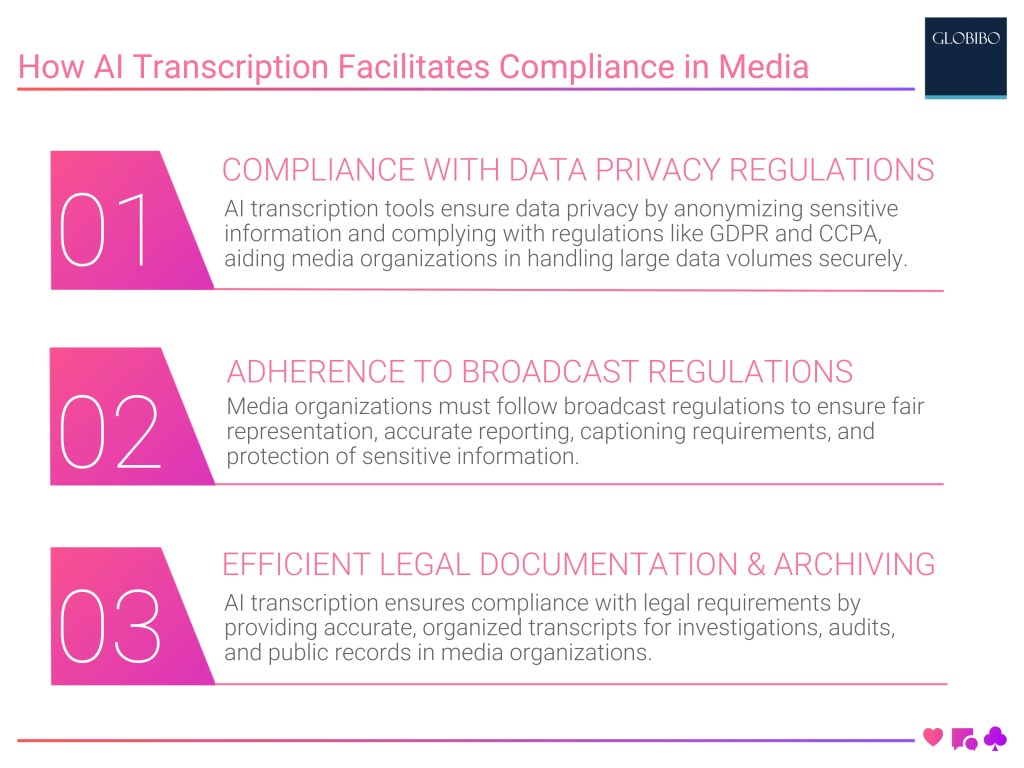
1. Compliance with Data Privacy Regulations
In media, handling large volumes of data—especially user-generated content, interviews, and discussions—requires compliance with strict data privacy laws such as the General Data Protection Regulation (GDPR) in Europe, and California Consumer Privacy Act (CCPA) in the United States. AI transcription tools offer features that ensure data privacy by anonymizing sensitive information and complying with industry-specific regulations.
Key Features for Compliance:
- Anonymization of Personal Data: Advanced AI transcription tools can detect and anonymize personal information in audio content, ensuring compliance with GDPR.
- Secure Storage: Data must be encrypted both during transcription and in storage. Many AI transcription tools offer secure, compliant storage solutions to protect sensitive information.
2. Adherence to Broadcast Regulations
Many countries have broadcast regulations that media organizations must follow to ensure fair and unbiased representation, accurate reporting, and accessible content. These include captioning requirements, accurate transcriptions, and the protection of sensitive information.
Broadcast Regulation Requirements:
- FCC Guidelines: The Federal Communications Commission (FCC) in the U.S. requires television broadcasters to provide closed captions for all public programming.
- Ofcom (UK): Similarly, the Office of Communications (Ofcom) in the UK requires that public broadcast content be accessible via captions or transcripts for certain demographic segments, particularly those with disabilities.
AI transcription tools help media companies meet these standards by automating the transcription process and ensuring captions are available in real-time.
3. Efficient Legal Documentation and Archiving
AI transcription not only aids in compliance with accessibility and broadcast laws but also ensures that media organizations have well-organized legal documentation. Media companies are often required to provide transcripts for legal investigations, audits, or public records. AI transcription tools facilitate accurate documentation of media content and ensure these records are readily available and searchable.
Accessibility Enhancements Offered by AI Transcription
- Automatic Captions and Subtitles:
- AI transcription automatically generates captions and subtitles for both live and prerecorded media, allowing hearing-impaired audiences to engage with the content.
- By offering captions in multiple languages, media organizations can cater to diverse, global audiences.
- Increased Engagement through Written Content:
- Providing written transcriptions allows users to consume media in environments where audio is not accessible or practical (e.g., noisy environments, during commutes).
- Compliance with Accessibility Regulations:
- AI transcription ensures compliance with laws like the ADA and WCAG by offering captions and transcriptions for all media content, reducing the risk of legal challenges.
- Enhanced Learning and Memory Retention:
- Transcripts help users retain information better by providing a written reference to audio or video content, enhancing the overall learning experience.
Compliance Benefits of AI Transcription in Media
- Meeting Legal Standards:
- AI transcription tools help media companies comply with GDPR, ADA, FCC, and other industry-specific regulations by automatically transcribing content and offering real-time captions.
- Properly formatted and timestamped transcripts allow for easy legal documentation and audit trails.
- Data Privacy and Anonymization:
- AI transcription systems anonymize personal and sensitive data in line with data privacy regulations such as GDPR, ensuring compliance and safeguarding user information.
- Reduced Risk of Penalties:
- By adhering to broadcast and accessibility laws, media organizations avoid financial penalties and reputational damage.
- Efficient Archiving and Retrieval of Media Content:
- AI transcription allows media companies to archive their content efficiently, with searchable text formats ensuring quick retrieval of information when needed for legal or compliance reasons.
Challenges in Implementing AI Transcription for Accessibility and Compliance
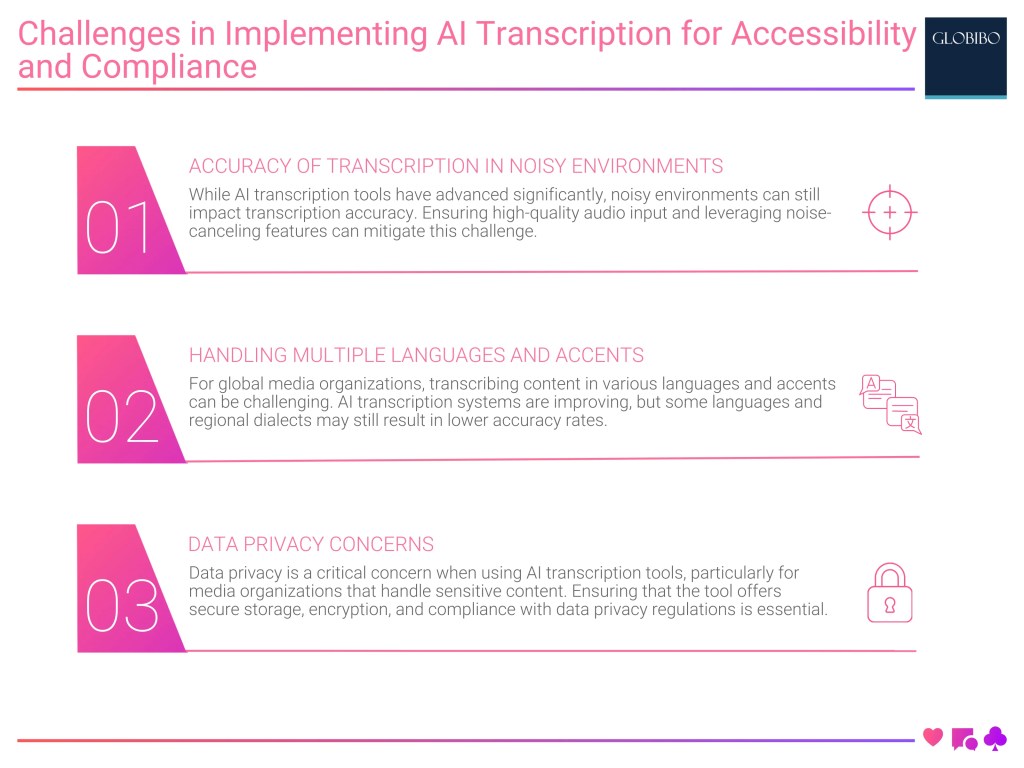
1. Accuracy of Transcription in Noisy Environments
While AI transcription tools have advanced significantly, noisy environments can still impact transcription accuracy. Ensuring high-quality audio input and leveraging noise-canceling features can mitigate this challenge.
2. Handling Multiple Languages and Accents
For global media organizations, transcribing content in various languages and accents can be challenging. AI transcription systems are improving, but some languages and regional dialects may still result in lower accuracy rates.
3. Data Privacy Concerns
Data privacy is a critical concern when using AI transcription tools, particularly for media organizations that handle sensitive content. Ensuring that the tool offers secure storage, encryption, and compliance with data privacy regulations is essential.
4. Customization for Industry-Specific Jargon
AI transcription tools may struggle with transcribing specialized jargon, technical terms, or brand-specific terminology. Customization of the AI model to recognize specific vocabulary is often necessary to ensure high transcription accuracy.
Conclusion for AI Transcription
AI transcription is transforming the media landscape by enhancing accessibility and ensuring compliance with legal and industry-specific regulations. From generating real-time captions to facilitating secure data management and archiving, AI transcription tools provide media organizations with the means to create inclusive content for diverse audiences while adhering to legal requirements. By integrating AI transcription into their workflows, media organizations can not only improve the accessibility of their content but also increase engagement and reach a wider audience, all while staying compliant with relevant laws and guidelines.
Academic References for AI Transcription
- AI-Based Language Translation and Interpretation Services: Improving Accessibility for Visually Impaired Students
- Automated generation of ‘good enough’transcripts as a first step to transcription of audio-recorded data
- [BOOK] Journalism, media and technology trends and predictions 2018
- [BOOK] Ensuring digital accessibility through process and policy
- Unlocking Accessibility: Captions, Transcripts, and Audio Descriptions
- Artificial intelligence: A strategic disruption in public relations
- Expanding explainability: Towards social transparency in ai systems
- [BOOK] Web accessibility: Web standards and regulatory compliance
- Examining the role of artificial intelligence (AI) in transforming print journalism in Uganda.
- [HTML] The implementation of the cognitive theory of multimedia learning in the design and evaluation of an AI educational video assistant utilizing large language …

Rick Lee
Project Manager – Event Technology
With over 10 years of experience in event technology, Rick is an expert in integrating cutting-edge tech solutions for seamless event execution. His expertise includes audio-visual setups, interactive displays, and live-streaming technologies. Rick’s innovative approach ensures every event is technologically advanced and highly engaging.
Youtube Video for AI Transcription
Key Articles for AI Event Transcription
- The Evolution of AI Transcription: From Manual to Automated Solutions
- Top AI Transcription Tools for Businesses: Features and Comparisons
- How AI Transcription Enhances Accessibility and Compliance in Media
- Accuracy in AI Transcription: Tips for Achieving the Best Results
Contacts
Certification

Testimonials



Event Technology