The Impact of AI Subtitling on Global Video Content Reach
AI subtitling is a transformative technology that significantly impacts the global reach of video content. By leveraging artificial intelligence to generate and translate subtitles, this technology extends the accessibility of video content to a wider audience, enhancing viewer engagement and breaking down language barriers. This article explores the technical aspects of AI Captioning & Subtitling, its impact on global video content reach, the benefits and challenges associated with its implementation, and best practices for optimizing its effectiveness. It includes structured lists and data-rich tables to provide a comprehensive understanding of this technology.
Technical Overview of AI Subtitling
AI Subtitling Technology
AI subtitling utilizes advanced algorithms and machine learning techniques to generate, synchronize, and translate subtitles for video content. This process involves several key technologies and components:
Key Components of AI Subtitling
- Speech Recognition: Converts spoken dialogue into text using speech-to-text (STT) systems.
- Machine Translation: Translates the generated text into multiple languages using neural machine translation (NMT) models.
- Subtitling Synchronization: Aligns subtitles with the video timeline to ensure accurate timing and display.
- Localization: Adapts translated subtitles to suit cultural and linguistic nuances of the target audience.
Components of AI Subtitling
AI Subtitling Workflow
The workflow for AI subtitling involves several stages, each crucial for ensuring the accuracy and effectiveness of subtitles:
- Speech-to-Text Conversion: Audio from the video is processed using STT technology to generate a text transcript.
- Translation: The transcript is translated into target languages using NMT models.
- Synchronization: Subtitles are synchronized with the video, ensuring they appear at the correct times.
- Localization: Translated subtitles are adapted to fit cultural and linguistic contexts.
- Quality Assurance: Final checks are conducted to ensure the accuracy and readability of subtitles.

Impact of AI Subtitling on Global Video Content Reach
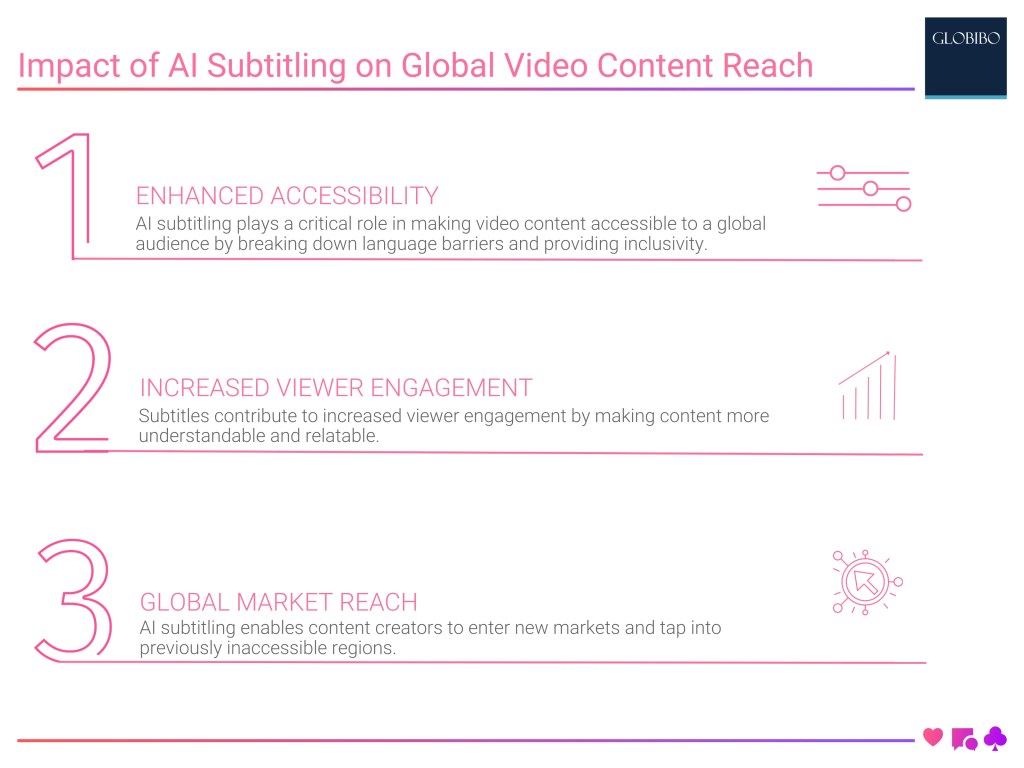
1. Enhanced Accessibility
AI subtitling plays a critical role in making video content accessible to a global audience by breaking down language barriers and providing inclusivity.
- International Audiences: Subtitles in multiple languages enable content creators to reach viewers around the world, expanding their audience base.
- Hearing Impairments: Subtitles provide access to video content for individuals with hearing impairments, improving overall accessibility.
Impact of AI Subtitling on Accessibility
2. Increased Viewer Engagement
Subtitles contribute to increased viewer engagement by making content more understandable and relatable.
- Improved Comprehension: Subtitles enhance understanding of complex or technical content, making it more accessible to viewers.
- Retention and Engagement: Videos with subtitles tend to retain viewers longer and improve overall engagement metrics.
Impact of AI Subtitling on Viewer Engagement
3. Global Market Reach
AI subtitling enables content creators to enter new markets and tap into previously inaccessible regions.
- Market Expansion: By providing content in multiple languages, companies can enter international markets and reach diverse audiences.
- Competitive Advantage: High-quality subtitling can give content creators a competitive edge in global content distribution.
Impact of AI Subtitling on Global Market Reach Challenges and Considerations
1. Accuracy and Quality Ensuring high accuracy and quality in AI-generated subtitles remains a significant challenge.
- Speech Recognition Errors: Misrecognition of words or phrases can lead to inaccuracies in subtitles.
- Translation Quality: Machine translation may not always capture the nuances and context of the original content.
2. Cultural and Linguistic Nuances Localization and cultural adaptation are critical for effective subtitling.
- Cultural Sensitivity: Subtitles must be adapted to fit cultural norms and expectations.
- Idiomatic Expressions: Accurate translation of idiomatic expressions and colloquialisms can be challenging for AI systems.
3. Technical Limitations Technical limitations can impact the effectiveness of AI subtitling.
- Synchronization Issues: Challenges in aligning subtitles with video content can affect readability.
- Complex Content: Handling complex or technical content may require advanced algorithms and human oversight.

Best Practices for Optimizing AI Subtitling
1. Regular Quality Assurance
Conduct regular quality assurance checks to ensure the accuracy and effectiveness of subtitles.
- Human Review: Incorporate human reviewers to validate AI-generated subtitles.
- Feedback Mechanisms: Implement feedback mechanisms to continuously improve subtitle quality.
2. Effective Localization Strategies
Adopt strategies for effective localization to ensure cultural and linguistic appropriateness.
- Localization Experts: Engage localization experts to adapt subtitles to target markets.
- Dynamic Updates: Implement systems for dynamic updates to address evolving language usage and cultural trends.
3. Leveraging Advanced Technology
Utilize advanced technology to enhance the accuracy and quality of AI subtitling.
- Context-aware Algorithms: Employ context-aware algorithms to improve translation and synchronization accuracy.
- Machine Learning Models: Use advanced machine learning models to handle complex and technical content.
Structured Lists for Evaluating AI Subtitling Effectiveness Criteria for Assessing Subtitling Accuracy
- Transcription Accuracy
- Word Recognition: Accuracy of the text transcribed from speech.
- Error Rate: Frequency of errors in the transcribed text.
- Translation Quality
- Semantic Accuracy: Accuracy in conveying the meaning of the original content.
- Grammatical Accuracy: Correctness of grammar and syntax in translated subtitles.
- Synchronization
- Timing Accuracy: Precision of subtitle synchronization with the video timeline.
- Readability: Clarity and readability of subtitles during video playback.
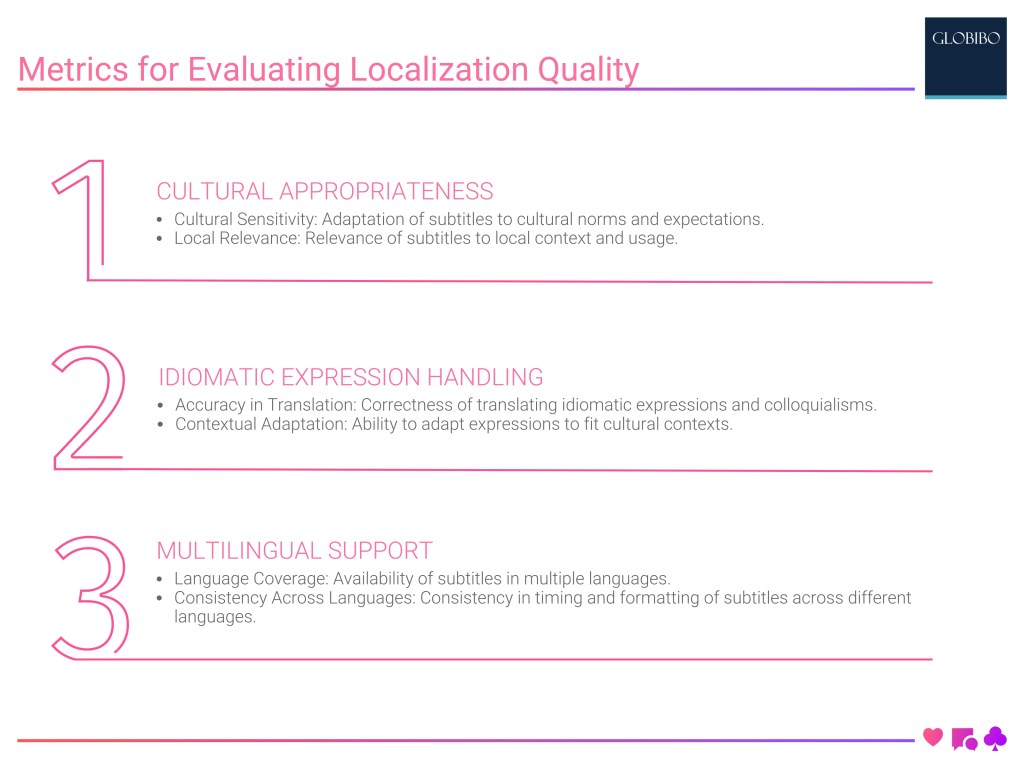
Metrics for Evaluating Localization Quality
- Cultural Appropriateness
- Cultural Sensitivity: Adaptation of subtitles to cultural norms and expectations.
- Local Relevance: Relevance of subtitles to local context and usage.
- Idiomatic Expression Handling
- Accuracy in Translation: Correctness of translating idiomatic expressions and colloquialisms.
- Contextual Adaptation: Ability to adapt expressions to fit cultural contexts.
- Multilingual Support
- Language Coverage: Availability of subtitles in multiple languages.
- Consistency Across Languages: Consistency in timing and formatting of subtitles across different languages.
Conclusion for AI Captioning and Subtitling
AI subtitling has a profound impact on the global reach of video content, enhancing accessibility, increasing viewer engagement, and enabling market expansion. By leveraging advanced AI technologies for speech recognition, machine translation, and subtitling synchronization, content creators can effectively reach diverse audiences and break down language barriers.However, challenges related to accuracy, cultural nuances, and technical limitations must be addressed to ensure high-quality subtitling. Implementing best practices, including regular quality assurance, effective localization strategies, and leveraging advanced technology, can help optimize AI subtitling and maximize its benefits.As AI technology continues to advance, the potential for improving subtitling accuracy and effectiveness will grow, further enhancing the global reach and impact of video content.
Academic References for AI Captioning and Subtitling
- [HTML] Language Context in the Future of Television and Video Industry: Exploring Trends and Opportunities
- The role of subtitling on Netflix: an audience study
- AI in the media and creative industries
- [BOOK] Audiovisual translation: subtitling
- [BOOK] Subtitling: Concepts and practices
- Danmaku subtitling: An exploratory study of a new grassroots translation practice on Chinese video-sharing websites
- Video news framing: the contribution of audiovisual translation
- Disruptive AVT workflows in the age of streaming: The Netflix equation
- Creating collaborative subtitling communities to increase access to audiovisual materials in academia
- Technologization of audiovisual translation

Rick Lee
Project Manager – Event Technology
With over 10 years of experience in event technology, Rick is an expert in integrating cutting-edge tech solutions for seamless event execution. His expertise includes audio-visual setups, interactive displays, and live-streaming technologies. Rick’s innovative approach ensures every event is technologically advanced and highly engaging.
Youtube Video for AI Captioning and Subtitling
Key Articles on AI Captioning and Subtitling
Contacts
Certification

Testimonials






Event Technology