Advancements in GPS Technology for Race Timing
The integration of GPS technology into race timing solutions represents a significant advancement in the field of sports timing and tracking. Historically, race timing relied on manual and mechanical methods, which were prone to errors and inefficiencies. With the advent of GPS technology, the landscape of race timing has transformed, offering unprecedented accuracy and convenience. This article delves into the latest advancements in GPS technology for race timing, exploring its impact on precision, efficiency, and overall race management.
Evolution of GPS Technology in Race Timing
1. Early GPS Systems
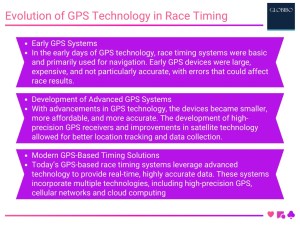
In the early days of GPS technology, race timing systems were basic and primarily used for navigation. Early GPS devices were large, expensive, and not particularly accurate, with errors that could affect race results. These systems provided only rudimentary data, making them unsuitable for precise race timing.
2. Development of Advanced GPS Systems
With advancements in GPS technology, the devices became smaller, more affordable, and more accurate. The development of high-precision GPS receivers and improvements in satellite technology allowed for better location tracking and data collection. This evolution has significantly enhanced the reliability of race timing solutions.
3. Modern GPS-Based Timing Solutions
Today’s GPS-based race timing systems leverage advanced technology to provide real-time, highly accurate data. These systems incorporate multiple technologies, including high-precision GPS, cellular networks, and cloud computing, to deliver comprehensive race timing solutions.
Key Components of Modern GPS-Based Race Timing Systems
1. GPS Receivers
GPS receivers are the core component of any GPS-based race timing system. Modern receivers are capable of providing high-accuracy location data, crucial for precise timing. Advances in receiver technology have improved accuracy, reduced latency, and enhanced signal reliability, which are critical for accurate race timing.
2. Data Transmission and Processing
Data transmission and processing technologies have evolved to handle the large volumes of data generated during races. Modern systems use high-speed cellular networks and cloud computing to transmit and process race data in real-time. This ensures that race results are delivered promptly and accurately.
3. Integration with Other Technologies
Integration with other technologies, such as RFID (Radio Frequency Identification) and advanced sensors, has further enhanced the capabilities of GPS-based race timing solutions. These integrations allow for seamless data collection, improved accuracy, and enhanced user experience.
4. Software and Algorithms
The software and algorithms used in modern GPS-based timing systems play a crucial role in processing and analyzing race data. Advanced algorithms enable real-time data analysis, automated result generation, and detailed performance metrics. This software is essential for ensuring the accuracy and reliability of race timing solutions.

Advantages of GPS Technology in Race Timing
1. Enhanced Accuracy
GPS technology provides highly accurate location data, which is critical for precise race timing. Modern GPS receivers can achieve centimeter-level accuracy, ensuring that race results are accurate and reliable. This high level of precision is particularly important for competitive races where even minor timing discrepancies can affect outcomes.
2. Real-Time Data Transmission
One of the significant advantages of GPS technology is the ability to transmit data in real-time. This feature allows race organizers, participants, and spectators to receive live updates on race progress, including split times and overall standings. Real-time data enhances the race experience and provides valuable insights for all stakeholders.
3. Improved Reliability
Modern GPS-based race timing systems offer improved reliability compared to traditional timing methods. The integration of advanced technology, such as high-precision receivers and robust data transmission networks, ensures that race timing solutions are less susceptible to errors and disruptions. This reliability is essential for maintaining the integrity of race results.
4. Scalability and Flexibility
GPS-based timing solutions are highly scalable and flexible, making them suitable for races of various sizes and formats. Whether it’s a small local event or a large international competition, GPS technology can be adapted to meet the specific needs of different races. This scalability allows for the efficient management of race timing across diverse event types.

Structured Lists
1. Key Features of Modern GPS-Based Race Timing Systems
- High-Precision GPS Receivers:
- Centimeter-level accuracy
- Reduced signal latency
- Enhanced signal reliability
- Real-Time Data Transmission:
- High-speed cellular networks
- Cloud-based data processing
- Live race updates
- Integration with RFID and Sensors:
- Seamless data collection
- Improved accuracy
- Enhanced user experience
- Advanced Software and Algorithms:
- Real-time data analysis
- Automated result generation
- Detailed performance metrics

2. Challenges and Considerations in Implementing GPS-Based Timing Solutions
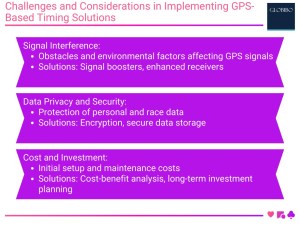
- Signal Interference:
- Obstacles and environmental factors affecting GPS signals
- Solutions: Signal boosters, enhanced receivers
- Data Privacy and Security:
- Protection of personal and race data
- Solutions: Encryption, secure data storage
- Cost and Investment:
- Initial setup and maintenance costs
- Solutions: Cost-benefit analysis, long-term investment planning
- Technical Expertise:
- Need for skilled personnel to manage and operate systems
- Solutions: Training programs, technical support
Case Studies and Applications
1. Case Study: Marathon Races
In marathon races, GPS technology has revolutionized race timing by providing real-time tracking of runners’ positions and splits. This data allows race organizers to monitor race progress, manage logistics, and provide participants with accurate performance information. The use of GPS technology in marathons has enhanced the overall race experience for both runners and spectators.
2. Case Study: Triathlons
Triathlons involve multiple segments, including swimming, cycling, and running, each with its own timing requirements. GPS technology has enabled precise tracking of athletes across different segments, ensuring accurate overall timing and split times. This capability is essential for managing complex race formats and providing comprehensive results.
Future Directions in GPS-Based Race Timing
1. Integration with Wearable Technology
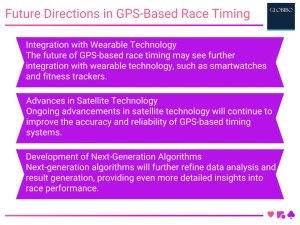
The future of GPS-based race timing may see further integration with wearable technology, such as smartwatches and fitness trackers. These devices can provide additional data points, such as heart rate and cadence, enhancing the accuracy and depth of race timing solutions.
2. Advances in Satellite Technology
Ongoing advancements in satellite technology will continue to improve the accuracy and reliability of GPS-based timing systems. The deployment of new satellites and improvements in satellite constellations will enhance the performance of GPS receivers and expand the capabilities of race timing solutions.
3. Development of Next-Generation Algorithms
Next-generation algorithms will further refine data analysis and result generation, providing even more detailed insights into race performance. These algorithms will leverage advancements in artificial intelligence and machine learning to offer predictive analytics and personalized race insights.
Comparison of Early vs. Modern GPS-Based Race Timing Systems
| Feature | Early GPS Systems | Modern GPS-Based Timing Solutions |
| Accuracy | Low | High (Centimeter-level) |
| Device Size | Large | Compact |
| Data Transmission | Limited | Real-time |
| Integration with Other Technologies | Minimal | Extensive (RFID, sensors) |
| Cost | High | Reduced (with scalable options) |
Conclusion of Race Timing Systems
Advancements in GPS technology have significantly enhanced race timing solutions, offering unparalleled accuracy, real-time data transmission, and improved reliability. As GPS technology continues to evolve, it will further revolutionize the field of race timing, providing even greater precision and efficiency. The integration of GPS with other technologies and ongoing advancements in satellite and algorithm development will continue to shape the future of race timing solutions.
Academic Reference Race Timing Systems
- Accuracy of GPS sport watches in measuring distance in an ultramarathon running race
- Unpacking the black box: applications and considerations for using GPS devices in sport
- Unpacking the black box: applications and considerations for using GPS devices in sport
- Sprint running performance monitoring: methodological and practical considerations
- Peak speed determination in football: is sprint testing necessary?
- Wearable performance devices in sports medicine
- The evolution of global positioning system (GPS) technology
- An introduction to SnapTrack server-aided GPS technology
- [BOOK] Position, navigation, and timing technologies in the 21st century: Integrated satellite navigation, sensor systems, and civil applications, volume 1
- Comparison of global positioning system (GPS) tracking and parent-report diaries to characterize children’s time–location patterns

Rick Lee
Project Manager – Event Technology
With over 10 years of experience in event technology, Rick is an expert in integrating cutting-edge tech solutions for seamless event execution. His expertise includes audio-visual setups, interactive displays, and live-streaming technologies. Rick’s innovative approach ensures every event is technologically advanced and highly engaging.
Youtube Video on Race Timing Systems
Key Articles for Timing Solutions
- Cost-Effective Race Timing Solutions for Small and Remote Events
- Advancements in GPS Technology for Race Timing
- The Role of Wearables in Enhancing Race Timing and Participant Experience
- Active vs. Passive Transponders: Which Race Timing System is Right for Your Event?
- How Real-Time Data Integration is Transforming Race Day Operations
- Ensuring Race Accuracy with Dual-Band GPS in Challenging Environments
- Backup Timing Solutions: Why Every Race Needs a Contingency Plan
- Innovative Race Timing Software: Features to Look for in 2024
Contacts
Certification

Testimonials



Event Technology