The Process of Video Translations: From Script to Final Product
The demand for video translations has increased dramatically in recent years, as businesses, educational institutions, and media outlets seek to reach a global audience. Translating video content goes beyond simply converting spoken words into another language; it involves a comprehensive process that ensures cultural relevance, technical accuracy, and audience engagement. This article outlines the technical steps involved in video translation, from script creation to the final product, providing a detailed look at the technologies, challenges, and best practices involved.
Why Video Translations Are Critical
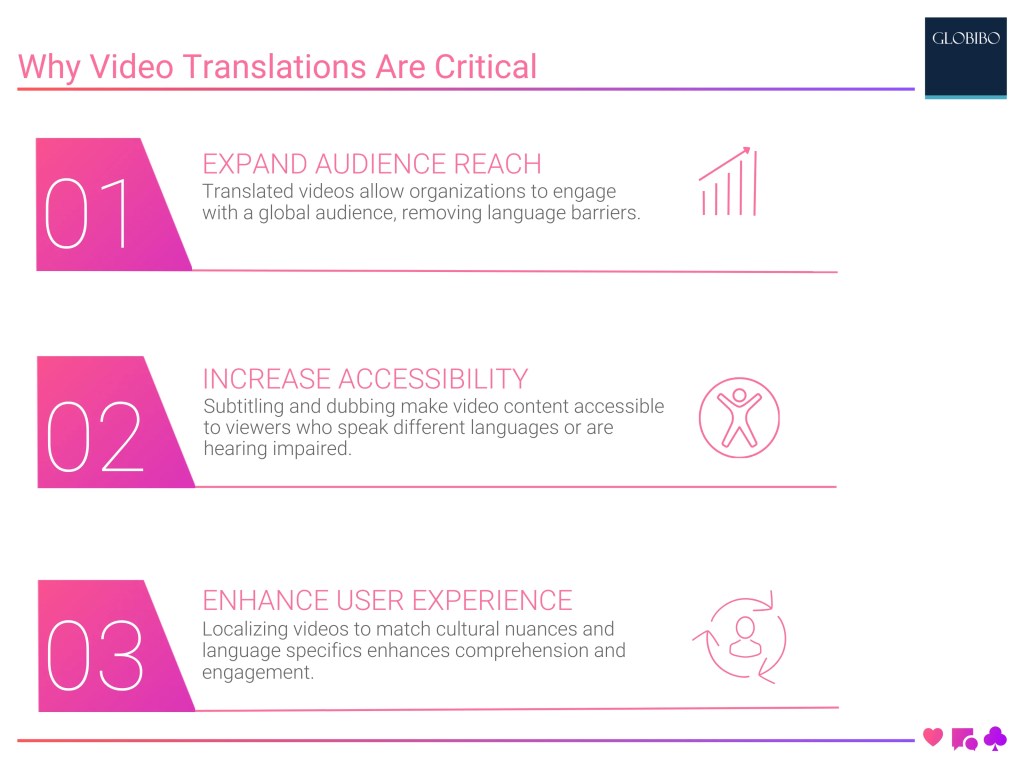
Before delving into the specifics of the video translation process, it’s essential to understand why video translations are crucial for global communication. Video is a highly engaging format, but its effectiveness can be limited if viewers do not understand the language in which it is produced. By translating video content, companies and educational platforms can:
- Expand Audience Reach: Translated videos allow organizations to engage with a global audience, removing language barriers.
- Increase Accessibility: Subtitling and dubbing make video content accessible to viewers who speak different languages or are hearing impaired.
- Enhance User Experience: Localizing videos to match cultural nuances and language specifics enhances comprehension and engagement.
These factors make the translation of videos a powerful tool for communication in the digital age.
The Video Translation Workflow
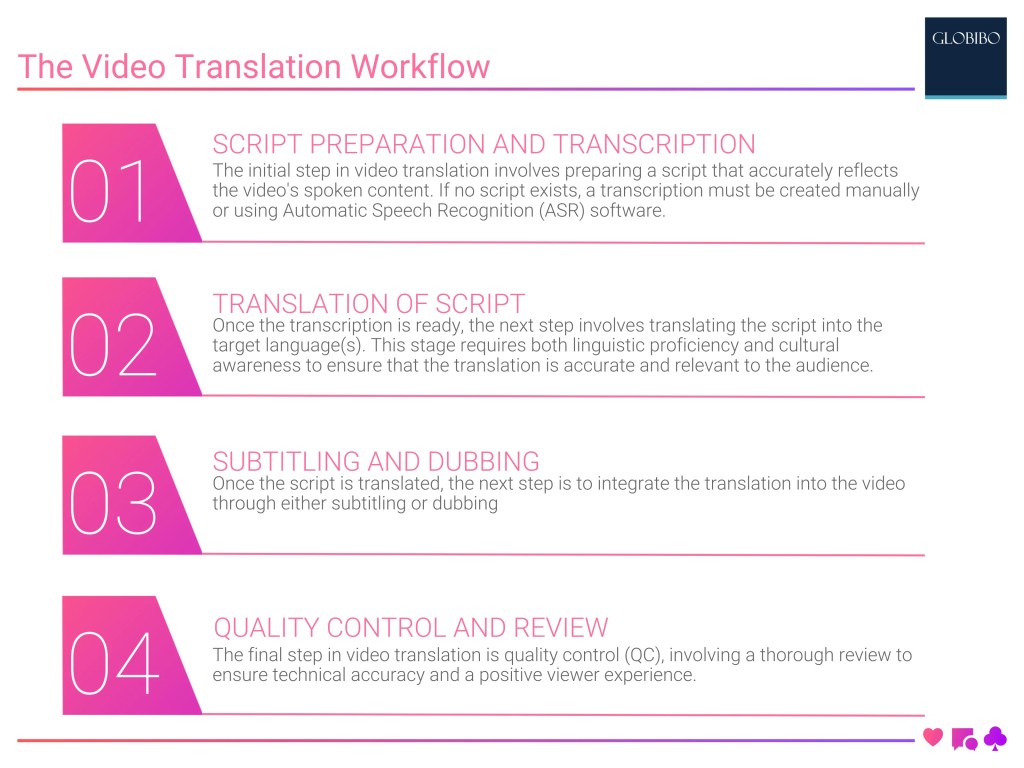
The video translation process involves multiple steps, each requiring specialized expertise and technology to ensure the final product meets the required standards. The following is a breakdown of each stage, from script creation to the final translated video product.
Script Preparation and Transcription
The first step in video translation begins with preparing a script that accurately represents the spoken content of the video. If the original video does not have a script, a transcription must be created. This can be done manually or through Automatic Speech Recognition (ASR) software.
Steps Involved:
- Transcription of Audio Content: Extracting the spoken language from the video and converting it into text. ASR software can be used for faster transcription, though human editing is necessary to correct errors.
- Script Review: The script is then reviewed for clarity, grammar, and coherence to ensure it aligns with the intended message.
Technologies for Script Preparation
| Technology | Description | Use Case |
| Automatic Speech Recognition (ASR) | Converts spoken content into written text | Transcription of spoken audio |
| Manual Transcription | Human transcription for increased accuracy | Complex or technical video content |
Translation of Script
Once the transcription is ready, the next step involves translating the script into the target language(s). This stage requires both linguistic proficiency and cultural awareness to ensure that the translation is accurate and relevant to the audience.
Key Aspects:
- Literal vs. Contextual Translation: Translators must consider cultural nuances and idiomatic expressions that may not have direct equivalents in the target language.
- Specialized Terminology: For technical or industry-specific videos, translators must be familiar with the relevant jargon and ensure that it is appropriately translated.
Challenges in Translation:
- Cultural Sensitivity: Words and phrases that are acceptable in one culture may be offensive or misunderstood in another. Therefore, localization is key.
- Maintaining Original Tone: The translation must preserve the tone and style of the original video, whether it is formal, casual, or instructional.
Types of Translation Approaches
| Approach | Description | Suitable For |
| Literal Translation | Word-for-word translation | Simple, non-technical content |
| Contextual Translation | Focuses on the meaning and intent behind words | Technical or cultural-specific content |
Subtitling and Dubbing
Once the script is translated, the next step is to integrate the translation into the video through either subtitling or dubbing.
Subtitling
Subtitles are text overlays displayed at the bottom of the screen. Subtitling is a common choice for translating videos as it is cost-effective and maintains the original audio.
- Time-Coding: Subtitles must be synchronized with the video’s dialogue using time codes. This requires specialized software that aligns the subtitles with the spoken words.
- Character Limits: Each subtitle must fit within certain character limits to ensure readability, which can sometimes challenge the translation’s accuracy.
Dubbing
Dubbing replaces the original audio with a translated voiceover. This method requires voice actors who speak the target language.
- Voice Synchronization: The dubbed audio must match the lip movements and expressions of the actors, which can be difficult when the translated script differs in length from the original.
- Localization of Tone: Dubbing requires not only linguistic accuracy but also matching the tone and emotion conveyed in the original video.
Subtitling vs. Dubbing
| Method | Description | Best For |
| Subtitling | Translated text overlaid on video | Cost-effective and multilingual content |
| Dubbing | Replacing original audio with translated audio | High-quality production requiring audio fidelity |
Video Editing and Synchronization
Once subtitles or dubbed audio is prepared, the next phase involves integrating them into the video and ensuring proper synchronization. Specialized video editing software is required for this process.
Key Processes:
- Audio/Video Synchronization: Aligning the newly dubbed audio or subtitles with the video’s original visual elements.
- Timing Adjustments: Subtitles must be adjusted to ensure they appear at the correct moments, maintaining viewer comprehension without lag.
- Graphics and Visual Elements: If the video includes on-screen text or graphics, these must also be translated and integrated into the video to maintain consistency.
Tools for Editing and Synchronization
| Software | Functionality | Use Case |
| Aegisub | Subtitling software with time-code features | Creating and syncing subtitles |
| Adobe Premiere Pro | Video editing and audio synchronization | Final video rendering with translated content |
Quality Control and Review
The final step in video translation is quality control (QC). This involves a comprehensive review to ensure that the translated video meets the necessary quality standards in terms of both technical accuracy and viewer experience.
QC Checklist:
- Accuracy of Translation: Ensuring the translations are accurate, culturally appropriate, and free from errors.
- Technical Synchronization: Verifying that subtitles or dubbed audio are correctly timed with the video.
- Audio/Visual Quality: Ensuring that the quality of both audio and visuals has not been compromised during the editing process.
Methods for Quality Assurance:
- Human Review: Professional linguists and video editors should review the final product to ensure quality.
- Automated Tools: Some QC processes can be automated, such as checking for synchronization errors or testing subtitle readability.
Challenges in Video Translations
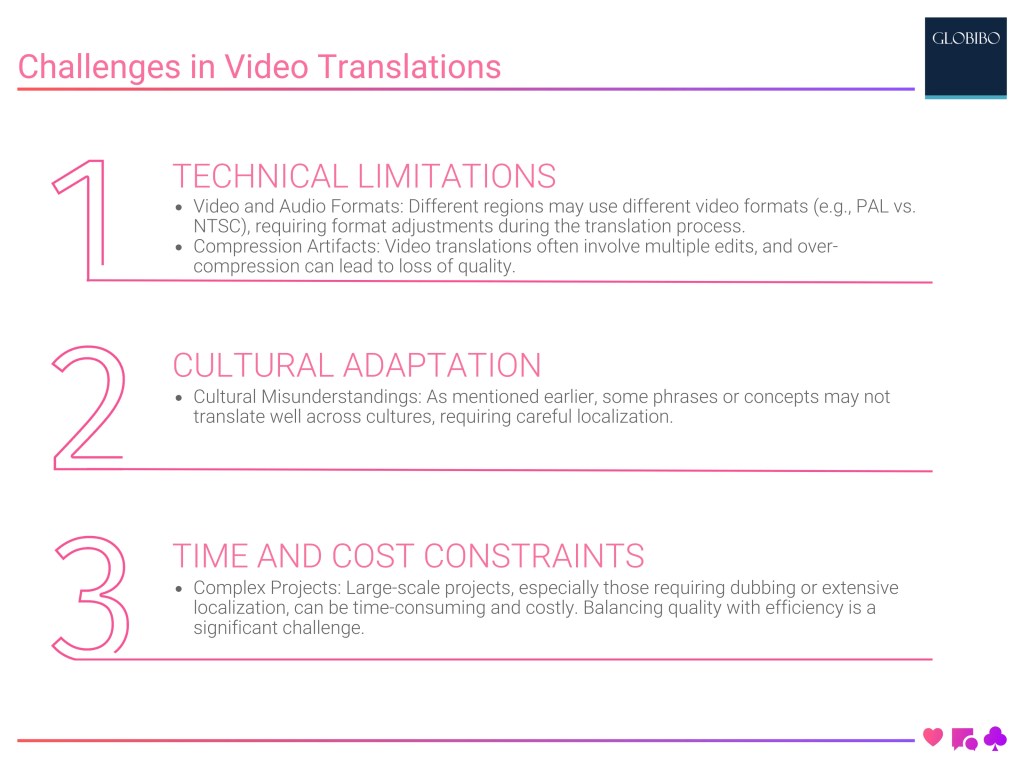
Video translations present a unique set of challenges that must be carefully navigated to produce a high-quality final product.
Technical Limitations
- Video and Audio Formats: Different regions may use different video formats (e.g., PAL vs. NTSC), requiring format adjustments during the translation process.
- Compression Artifacts: Video translations often involve multiple edits, and over-compression can lead to loss of quality.
Cultural Adaptation
- Cultural Misunderstandings: As mentioned earlier, some phrases or concepts may not translate well across cultures, requiring careful localization.
Time and Cost Constraints
- Complex Projects: Large-scale projects, especially those requiring dubbing or extensive localization, can be time-consuming and costly. Balancing quality with efficiency is a significant challenge.
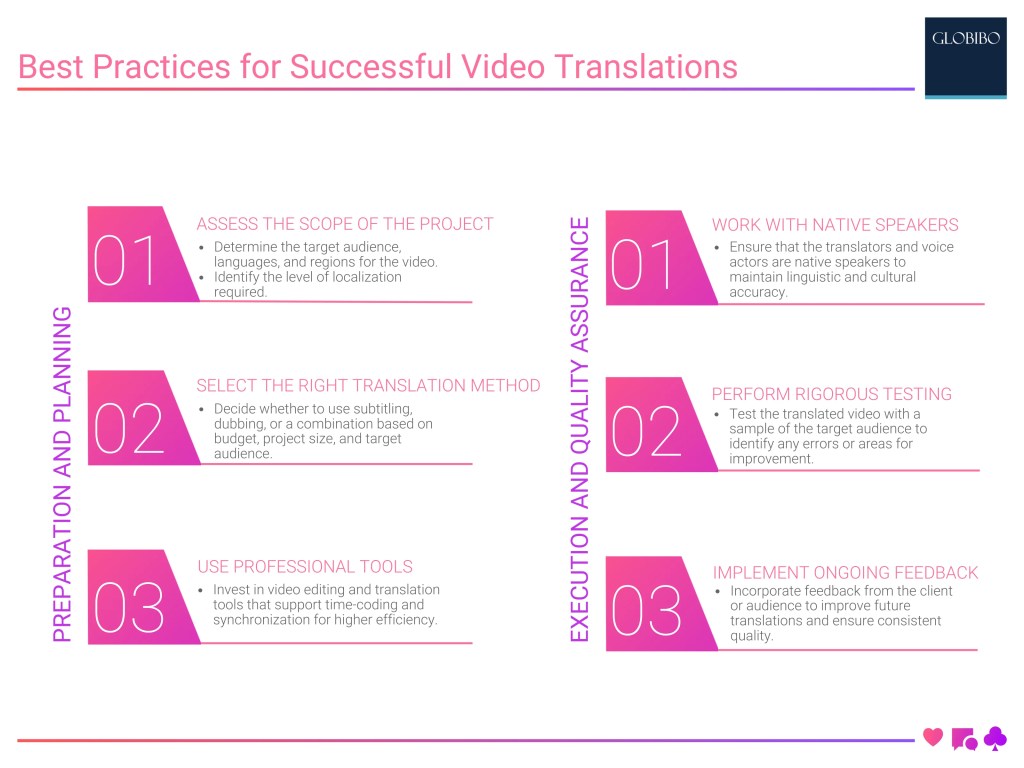
Best Practices for Successful Video Translations
To ensure successful video translations, it is critical to follow certain best practices.
Preparation and Planning
- Assess the Scope of the Project:
- Determine the target audience, languages, and regions for the video.
- Identify the level of localization required.
- Select the Right Translation Method:
- Decide whether to use subtitling, dubbing, or a combination based on budget, project size, and target audience.
- Use Professional Tools:
- Invest in video editing and translation tools that support time-coding and synchronization for higher efficiency.
Execution and Quality Assurance
- Collaborate with Native Speakers:
- Ensure that the translators and voice actors are native speakers to maintain linguistic and cultural accuracy.
- Perform Rigorous Testing:
- Test the translated video with a sample of the target audience to identify any errors or areas for improvement.
- Implement Continuous Feedback:
- Incorporate feedback from the client or audience to improve future translations and ensure consistent quality.
Conclusion for Video Translation
The process of video translations is highly complex, involving several stages that ensure the accurate and culturally relevant translation of content. From transcription to final editing, each step requires specialized skills and technology to produce a high-quality end product. By following best practices such as effective planning, cultural adaptation, and rigorous quality control, organizations can effectively reach global audiences, expanding their reach and improving accessibility through video translations.
By ensuring careful attention to each step, organizations can deliver high-quality, culturally relevant video translations that resonate with their target audiences and enhance their global communication efforts.
Academic References for Video Translation
- Challenges in the translation of video game
- Issues in audiovisual translation
- The position of audiovisual translation studies
- Technology and audiovisual translation
- Translating video content to natural language descriptions
- WRITING VIDEO SCRIPT OF RUMAH ONCAK AS THE SOUVENIR STORE IN PALEMBANG
- Exploring audiovisual translation as a didactic tool in the secondary school foreign language classroom
- Audiovisual translation: Conception, types, characters’ speech and translation strategies applied
- [BOOK] Implementing machine translation and post-editing to the translation of wildlife documentaries through voice-over and off-screen dubbing: a research on effort …
- Technological advances in audiovisual translation

Rick Lee
Project Manager – Event Technology
With over 10 years of experience in event technology, Rick is an expert in integrating cutting-edge tech solutions for seamless event execution. His expertise includes audio-visual setups, interactive displays, and live-streaming technologies. Rick’s innovative approach ensures every event is technologically advanced and highly engaging.
Youtube Video for Video Translations
Key Articles on Video Translations
Contacts
Certification

Testimonials


Event Technology