The Benefits of Live Translation for Virtual Events and Webinars
In the rapidly evolving landscape of virtual events and webinars, live translation has emerged as a critical component for facilitating global communication. As organizations increasingly reach out to international audiences, ensuring that content is accessible in multiple languages becomes paramount. This article explores the numerous benefits of live translation for virtual events and webinars, focusing on how it enhances accessibility, engagement, and overall event effectiveness.
The Role of Live Translation in Virtual Events
Live translation, also known as simultaneous interpretation, involves translating spoken content in real time. This technology is particularly advantageous for virtual events and webinars, where participants may be dispersed across different countries and speak various languages. The benefits of integrating live translation into virtual events are multifaceted and contribute to a more inclusive and effective communication strategy.
1. Enhanced Accessibility
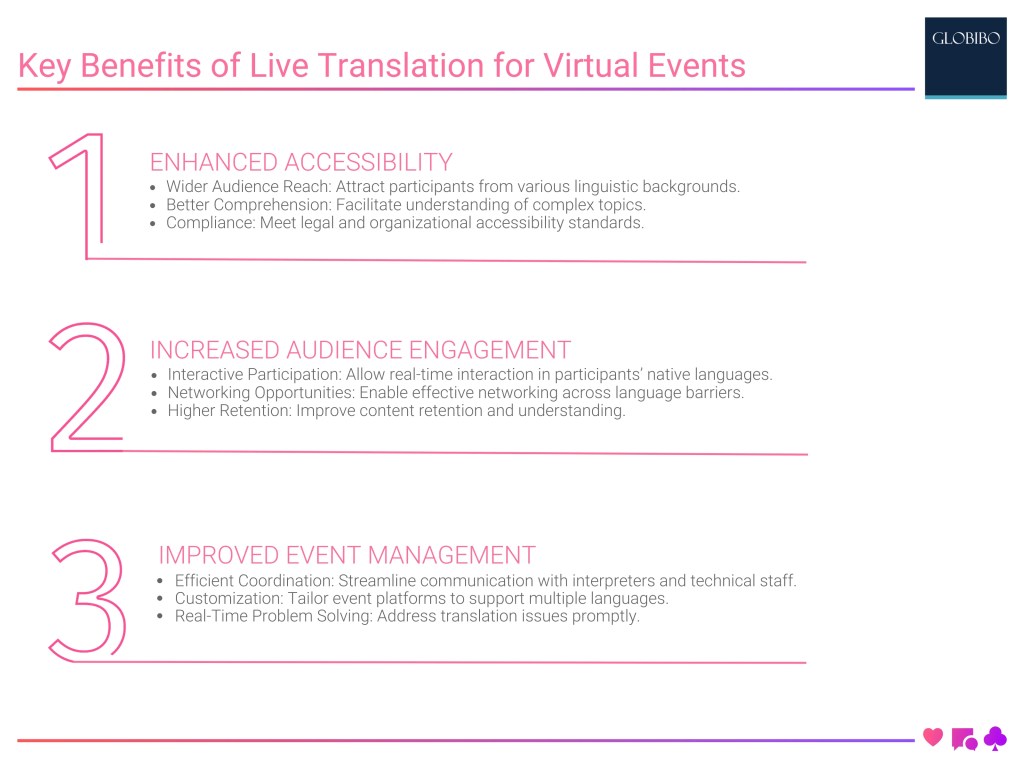
Global Reach and Inclusion: Live translation breaks down language barriers, making virtual events accessible to a diverse audience. This inclusivity ensures that participants from different linguistic backgrounds can engage with the content in their preferred language.
Key Accessibility Benefits:
- Wider Audience Engagement: By providing real-time translations, events can attract participants from various regions, increasing global reach and participation.
- Improved Understanding: Attendees can comprehend complex topics more easily when they receive information in their native language, leading to better engagement and interaction.
- Compliance with Accessibility Standards: Live translation helps meet legal and organizational standards for accessibility, ensuring that content is available to all individuals, including those with limited English proficiency.
2. Increased Audience Engagement
Interactive Participation: Live translation enhances audience engagement by allowing participants to actively contribute to discussions, Q&A sessions, and interactive segments without language constraints.
Engagement Benefits:
- Real-Time Interaction: Participants can ask questions and provide feedback in their native language, fostering more dynamic and interactive sessions.
- Enhanced Networking Opportunities: Attendees from different linguistic backgrounds can connect and collaborate more effectively, broadening networking opportunities.
- Higher Retention Rates: Content delivered in a participant’s native language is more likely to be retained and understood, increasing the overall effectiveness of the event.
3. Improved Event Management
Efficient Coordination: Live translation simplifies the management of multilingual virtual events by providing seamless integration of translation services into the event platform.
Management Benefits:
- Streamlined Communication: Event organizers can coordinate with interpreters and technical staff to ensure smooth operation of translation services, reducing potential disruptions.
- Customization and Flexibility: Event platforms can be tailored to support multiple languages, allowing for customized translation services based on audience needs.
- Real-Time Problem Solving: Technical issues related to translation can be addressed promptly, ensuring continuous and effective communication.
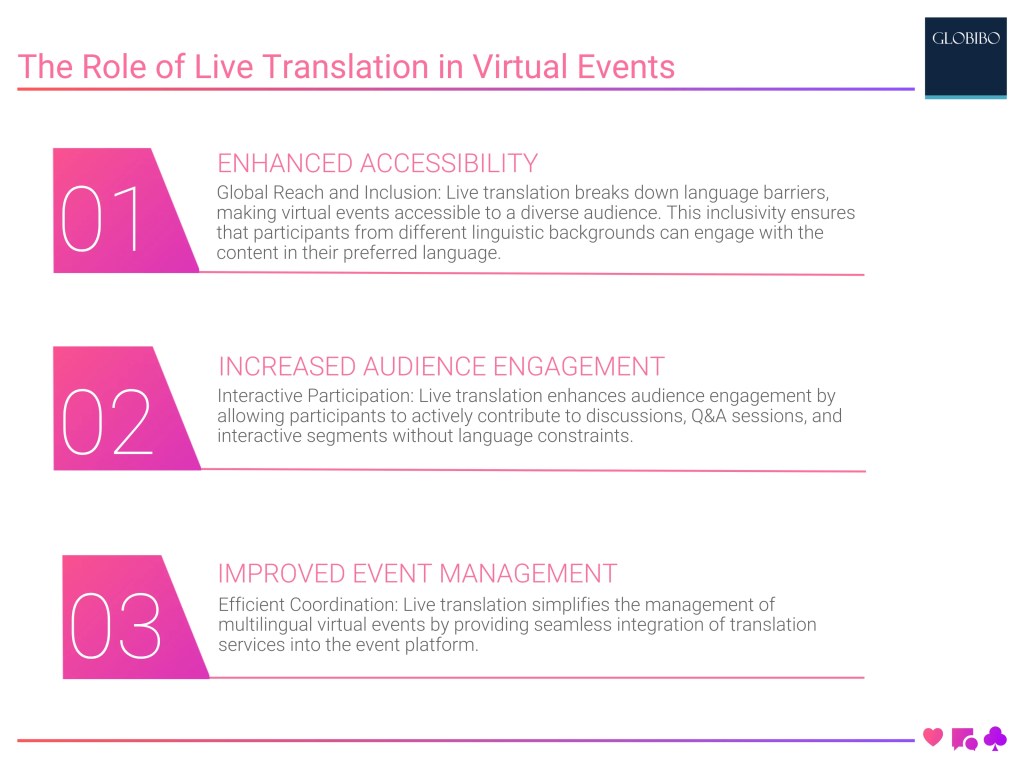
Key Benefits of Live Translation for Virtual Events
- Enhanced Accessibility:
- Wider Audience Reach: Attract participants from various linguistic backgrounds.
- Better Comprehension: Facilitate understanding of complex topics.
- Compliance: Meet legal and organizational accessibility standards.
- Increased Audience Engagement:
- Interactive Participation: Allow real-time interaction in participants’ native languages.
- Networking Opportunities: Enable effective networking across language barriers.
- Higher Retention: Improve content retention and understanding.
- Improved Event Management:
- Efficient Coordination: Streamline communication with interpreters and technical staff.
- Customization: Tailor event platforms to support multiple languages.
- Real-Time Problem Solving: Address translation issues promptly.
Technology and Tools for Live Translation in Virtual Events
1. Live Translation Software
Integration and Features: Live translation software is essential for facilitating real-time interpretation in virtual events. It integrates with event platforms to deliver seamless multilingual experiences.
Key Features:
- Real-Time Transcription: Converts spoken language into text in multiple languages, which is then displayed to participants.
- Multi-Language Support: Provides simultaneous translation for various languages, accommodating diverse audiences.
- Customizable Interfaces: Allows event organizers to customize the translation interface to match the event’s branding and requirements.
2. AI-Powered Translation Tools
Enhancing Accuracy: AI-powered tools improve the efficiency and accuracy of live translation by leveraging machine learning and natural language processing (NLP).
AI Features:
- Contextual Understanding: AI tools analyze context to provide more accurate translations and handle complex terminology.
- Speech Recognition: Converts spoken words into text with high precision, reducing errors in translation.
- Terminology Management: Maintains and updates databases of specialized terms, ensuring consistency in translations.
3. Cloud-Based Translation Platforms
Flexibility and Scalability: Cloud-based platforms offer scalable solutions for virtual events, providing remote access to translation services and integrating seamlessly with event technology.

Platform Benefits:
- Remote Access: Enables interpreters to work from different locations, supporting global events.
- Scalability: Adjusts the number of interpreters and languages based on event size and requirements.
- Integration with Event Platforms: Seamlessly integrates with virtual event platforms to provide real-time translation.
Comparison of Live Translation Technologies
| Technology | Key Features | Advantages for Virtual Events |
| Live Translation Software | Real-time transcription, multi-language support, customizable interfaces | Seamless integration with event platforms, real-time multilingual support |
| AI-Powered Translation Tools | Contextual understanding, speech recognition, terminology management | Improved translation accuracy, efficient handling of complex terminology |
| Cloud-Based Translation Platforms | Remote access, scalability, platform integration | Flexible and scalable solutions, global accessibility |
Implementing Live Translation in Virtual Events
1. Planning and Preparation
Pre-Event Strategy: Effective implementation of live translation requires thorough planning and preparation to ensure smooth execution during the event.
Key Steps:
- Identify Language Needs: Assess the linguistic requirements of your audience and select the appropriate languages for translation.
- Choose the Right Technology: Evaluate and select translation software, AI tools, and cloud-based platforms that meet your event’s needs.
- Engage Professional Interpreters: Hire experienced interpreters with expertise in the event’s subject matter and the required languages.
2. Technical Setup and Testing
Ensuring Reliability: Proper technical setup and testing are crucial for the successful delivery of live translation during virtual events.
Key Considerations:
- Test Equipment and Software: Conduct thorough testing of all translation equipment and software to ensure functionality and compatibility.
- Coordinate with Interpreters: Ensure interpreters are familiar with the event technology and have access to necessary resources.
- Plan for Contingencies: Develop backup plans for technical issues and ensure that support is available during the event.
3. Real-Time Monitoring and Support
Maintaining Quality: Continuous monitoring and support during the event help maintain the quality and effectiveness of live translation services.
Monitoring Tasks:
- Monitor Translation Channels: Regularly check audio and translation channels to ensure clarity and accuracy.
- Address Issues Promptly: Quickly resolve any technical or translation issues to minimize disruptions.
- Gather Feedback: Collect feedback from participants to assess the effectiveness of translation services and identify areas for improvement.
Best Practices for Implementing Live Translation
- Planning and Preparation:
- Assess Language Needs: Determine the languages required for translation based on audience demographics.
- Select Technology: Choose suitable translation software and tools.
- Hire Interpreters: Engage qualified interpreters with relevant expertise.
- Technical Setup and Testing:
- Test Equipment: Ensure all translation equipment and software are fully functional.
- Coordinate with Interpreters: Familiarize interpreters with the event technology.
- Prepare Contingencies: Develop and test backup plans for technical issues.
- Real-Time Monitoring and Support:
- Monitor Channels: Regularly check translation channels for accuracy and clarity.
- Resolve Issues: Address any technical or translation issues promptly.
- Collect Feedback: Gather feedback from attendees to improve future translation services.
Challenges and Solutions
1. Language and Cultural Nuances
Handling Variations: Translating idiomatic expressions and cultural references can be challenging, but with proper preparation and expert interpreters, these challenges can be addressed.
Solutions:
- Pre-Event Briefing: Provide interpreters with background information on cultural nuances and idiomatic expressions.
- Expert Interpreters: Hire interpreters with a deep understanding of cultural context and specialized knowledge.
2. Technical Difficulties
Ensuring Stability: Technical issues such as audio disruptions or software malfunctions can affect translation quality. Ensuring robust technical support and backup systems can mitigate these risks.
Solutions:
- Redundant Systems: Implement backup audio systems and technical support teams.
- Regular Testing: Conduct thorough pre-event testing to identify and resolve potential issues.
3. Managing Multilingual Content
Streamlining Delivery: Coordinating multiple languages simultaneously can be complex. Effective planning and real-time management are essential to ensure smooth delivery.
Solutions:
- Dedicated Management Team: Assign a team to oversee translation services and coordinate with interpreters.
- Efficient Scheduling: Plan and schedule translation sessions to manage multilingual content effectively.

Conclusion of Live Translation for Virtual Events
Live translation plays a vital role in enhancing the effectiveness of virtual events and webinars by making content accessible to a global audience. The benefits of live translation include improved accessibility, increased audience engagement, and streamlined event management. By leveraging advanced translation technologies and adhering to best practices, organizers can deliver high-quality, multilingual virtual events that resonate with diverse audiences.
Understanding and addressing the key considerations outlined in this article will help event organizers implement successful live translation strategies, ensuring that their virtual events are inclusive, engaging, and effective. As the demand for global communication continues to grow, the importance of live translation in virtual events will only become more pronounced, underscoring its value in the modern event landscape.
Academic References of Live Translation for Virtual Events
- [HTML] Maximizing virtual meetings and conferences: a review of best practices
- Online conferences–Towards a new (virtual) reality
- [BOOK] The virtual ticket: The event manager’s guide to live streaming engaging virtual events
- [BOOK] Virtual Presenting: A Guide to Formats, Production and Authentic Delivery
- From hybrid events to the next generation-interactive virtual events: Viewed from three different stakeholders’ point of view
- Webinars as instructional tools in English language teaching context
- The experience of using the webinar in the preparation of engineering specialists
- Twelve tips to present an effective webinar
- [HTML] Adapting scientific conferences to the realities imposed by COVID-19
- Going virtual: The impact of COVID-19 on internships in tourism, events, and hospitality education

Rick Lee
Project Manager – Event Technology
With over 10 years of experience in event technology, Rick is an expert in integrating cutting-edge tech solutions for seamless event execution. His expertise includes audio-visual setups, interactive displays, and live-streaming technologies. Rick’s innovative approach ensures every event is technologically advanced and highly engaging.
Youtube Video on Live Translation for Virtual Events
Key Articles on Live Translation
- The Evolution of AI Transcription: From Manual to Automated Solutions
- Top AI Transcription Tools for Businesses: Features and Comparisons
- How AI Transcription Enhances Accessibility and Compliance in Media
- Accuracy in AI Transcription: Tips for Achieving the Best Results
- Live Translation in International Conferences: Key Considerations
- The Benefits of Live Translation for Virtual Events and Webinars
- Live Translation Services: How They Facilitate Cross-Cultural Communication
- How to Choose the Right Language Pair for Live Translation Services
Contacts
Certification

Testimonials


Event Technology