Live Translation Services: How They Facilitate Cross-Cultural Communication
In an increasingly globalized world, effective cross-cultural communication is essential for business success, diplomatic relations, and educational exchange. Live translation services play a pivotal role in bridging language gaps and facilitating seamless communication between individuals and organizations from different linguistic backgrounds. This article delves into how live translation services enhance cross-cultural communication, focusing on their technical aspects, benefits, and the impact on various sectors.
The Role of Live Translation Services
Live translation, also known as simultaneous interpretation, is a technology that allows spoken content to be translated into another language in real time. This service is indispensable for meetings, conferences, webinars, and other events where participants speak different languages. The ability to provide accurate, real-time translations ensures that all participants can understand and contribute to discussions without language barriers.
Key Features of Live Translation Services
- Real-Time Interpretation: Live translation services provide instant interpretation of spoken language, allowing participants to follow conversations as they happen.
- Multi-Language Support: These services can accommodate multiple languages simultaneously, making them ideal for international events with diverse audiences.
- Integration with Technology: Modern live translation services are integrated with various platforms, including video conferencing tools and virtual event software, ensuring seamless operation.

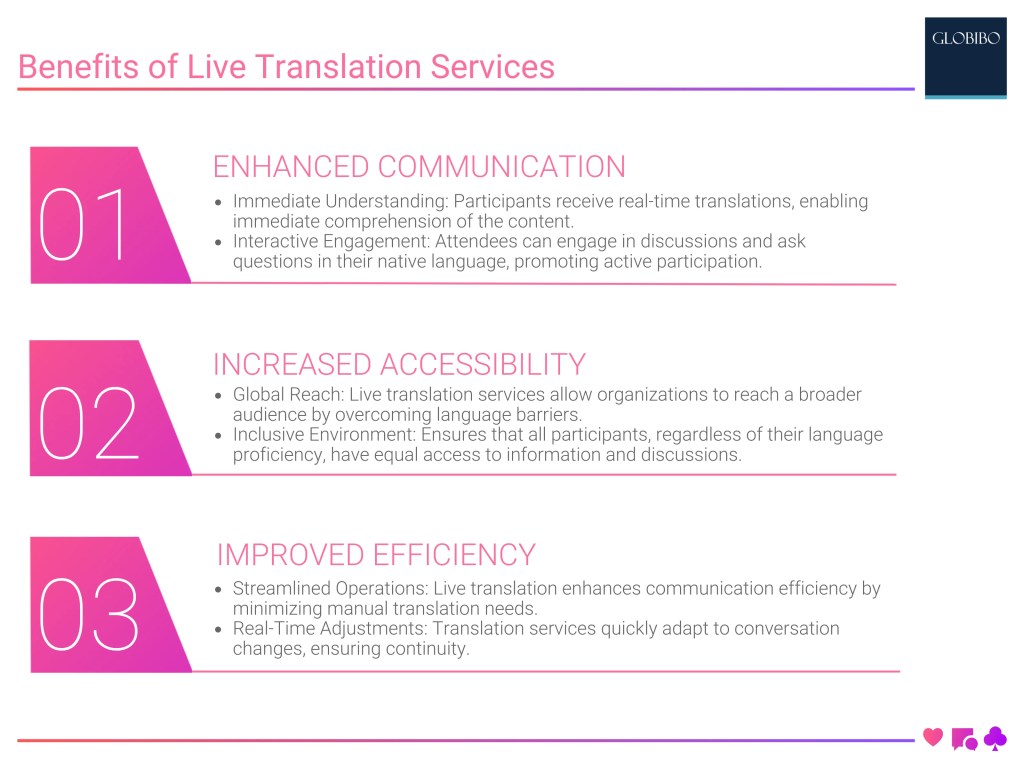
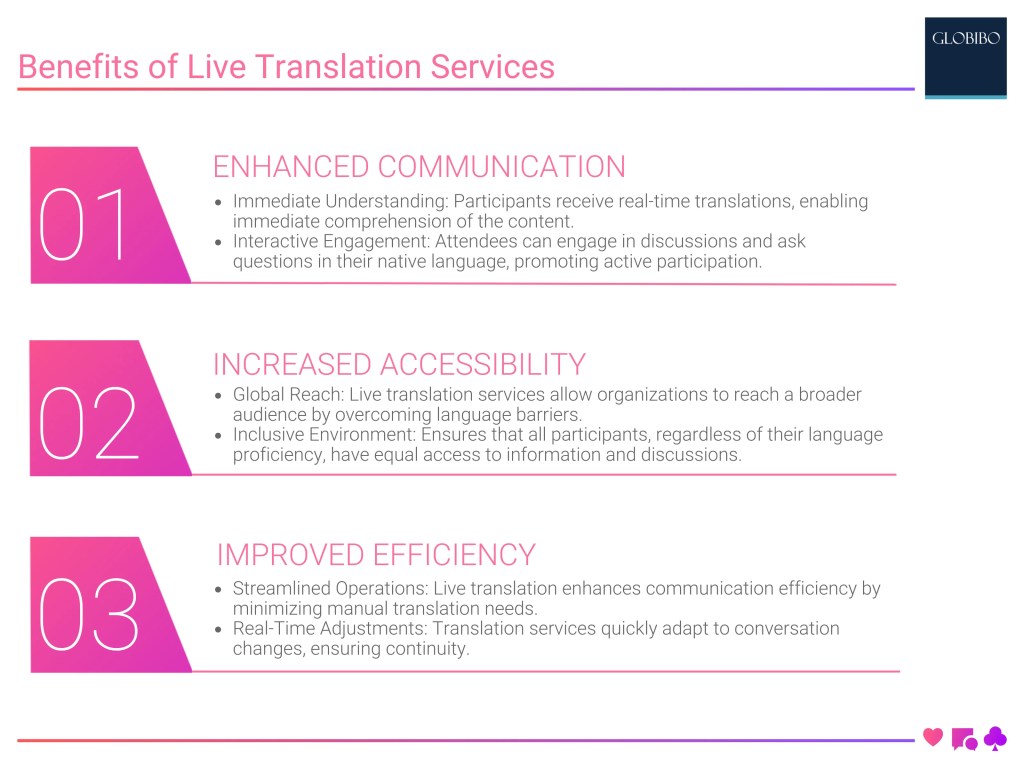
Benefits of Live Translation Services
- Enhanced Communication
- Immediate Understanding: Participants receive real-time translations, enabling immediate comprehension of the content.
- Interactive Engagement: Attendees can engage in discussions and ask questions in their native language, promoting active participation.
- Increased Accessibility
- Global Reach: Live translation services allow organizations to reach a broader audience by overcoming language barriers.
- Inclusive Environment: Ensures that all participants, regardless of their language proficiency, have equal access to information and discussions.
- Improved Efficiency
- Streamlined Operations: Integrating live translation into events and meetings streamlines communication processes, reducing the need for manual translation and increasing overall efficiency.
- Real-Time Adjustments: Translation services can adapt quickly to changes in the conversation, maintaining continuity and coherence.
How Live Translation Services Facilitate Cross-Cultural Communication
1. Bridging Language Gaps
Seamless Integration: Live translation services bridge language gaps by providing real-time translations that enable clear communication between participants who speak different languages.
Examples:
- International Conferences: At global conferences, live translation ensures that keynote speakers, panelists, and attendees can communicate effectively despite linguistic differences.
- Diplomatic Meetings: For diplomatic negotiations, accurate live translation is crucial for ensuring that all parties understand each other’s positions and proposals.
2. Enhancing Cultural Understanding
Contextual Accuracy: Effective live translation not only converts words but also captures the cultural context and nuances of the original message.
Examples:
- Cultural Sensitivity: Translators with cultural expertise ensure that idiomatic expressions and cultural references are accurately conveyed, avoiding misunderstandings.
- Educational Exchanges: In academic settings, live translation supports cross-cultural learning by enabling students and researchers from different backgrounds to collaborate and share knowledge.
3. Supporting Global Business Operations
Effective Communication: For multinational companies, live translation services are essential for smooth communication across different regions and departments.
Examples:
- Multinational Meetings: Live translation facilitates discussions among team members from various countries, promoting collaboration and decision-making.
- Client Interactions: Businesses can provide high-quality customer service by offering live translation during client meetings and support calls.
Applications of Live Translation Services
- International Conferences:
- Keynote Speeches: Enables attendees to understand presentations in their preferred language.
- Panel Discussions: Facilitates real-time interaction among panelists and attendees from different linguistic backgrounds.
- Diplomatic Meetings:
-
- Negotiations: Ensures accurate communication of proposals and agreements.
- Summit Meetings: Supports discussions among leaders and officials from various countries.
-
- Global Business Operations:
- Multinational Meetings: Promotes effective communication among global teams.
- Client Interactions: Enhances customer service through real-time translation of support calls and meetings.
Technology Behind Live Translation Services
1. Translation Software and Platforms
Integration: Modern translation software integrates with virtual event platforms, allowing for seamless delivery of real-time translations.
Key Features:
- Real-Time Speech Recognition: Converts spoken language into text instantly.
- Multi-Language Capability: Supports multiple languages simultaneously.
- Customizable Interfaces: Allows customization of translation interfaces to fit the event’s branding and needs.
2. AI-Powered Translation Tools
Advancements: AI-powered translation tools use machine learning and natural language processing (NLP) to improve translation accuracy and efficiency.
AI Features:
- Contextual Understanding: AI tools analyze the context to provide accurate translations.
- Speech-to-Text Conversion: Converts spoken words into text with high precision.
- Terminology Management: Maintains databases of specialized terms to ensure consistent translations.
3. Hardware and Equipment
Quality Assurance: High-quality audio and video equipment are essential for delivering clear and accurate live translations.

Equipment:
- Microphones and Headsets: High-quality microphones and headsets ensure clear audio for interpreters and participants.
- Audio Mixing Consoles: Manage audio inputs and outputs to ensure balanced sound and minimize interference.
- Interpretation Booths: Provide a controlled environment for interpreters to work effectively.
Comparison of Live Translation Technologies
| Technology | Key Features | Advantages for Cross-Cultural Communication |
| Translation Software | Real-time speech recognition, multi-language support, customizable interfaces | Seamless integration, immediate understanding, customized user experience |
| AI-Powered Translation Tools | Contextual understanding, speech-to-text conversion, terminology management | Enhanced accuracy, efficient handling of complex terms, improved translation quality |
| Hardware and Equipment | Microphones, headsets, audio mixing consoles, interpretation booths | Clear audio, balanced sound, effective interpreter environment |
Challenges and Solutions
1. Ensuring Translation Accuracy
Complexity: Achieving high accuracy in live translation can be challenging due to language nuances and technical jargon.
Solutions:
- Qualified Interpreters: Employ experienced interpreters with expertise in the subject matter and language pair.
- Pre-Event Briefing: Provide interpreters with background information and terminology in advance.
2. Managing Technical Issues
Reliability: Technical issues such as audio disruptions or software malfunctions can affect translation quality.
Solutions:
- Redundant Systems: Implement backup audio systems and technical support.
- Regular Testing: Conduct thorough pre-event testing of equipment and software.
3. Handling Cultural Differences
Context: Cultural differences can impact the interpretation of messages and require careful handling.

Solutions:
- Cultural Training: Provide interpreters with cultural training to enhance their understanding of context and idiomatic expressions.
- Consultation with Experts: Engage cultural consultants to ensure accurate representation of cultural nuances.
Conclusion for Live Translation
Live translation services are crucial for facilitating effective cross-cultural communication in an increasingly interconnected world. By providing real-time interpretation, enhancing accessibility, and supporting global business operations, these services enable seamless interactions between individuals and organizations from different linguistic backgrounds. The advancements in translation technology, combined with best practices for implementation, ensure that live translation continues to play a vital role in bridging language gaps and fostering understanding.
As the demand for global communication grows, the importance of live translation services will only increase. Organizations that leverage these services effectively will benefit from enhanced communication, increased accessibility, and improved global engagement, ultimately contributing to their success in the international arena.
Academic References for Live Translation
- Research on the impact of the learning activity supported by 360-degree video and translation technologies on cross–cultural knowledge and attitudes development
- Translation and intercultural communication: Bridges and barriers
- Facilitating online cross–cultural learning project with speech-enabled language translation technology
- [BOOK] Medical interpreting and cross–cultural communication
- [BOOK] Medical interpreting and cross–cultural communication
- Applications of speech-to-text recognition and computer-aided translation for facilitating cross–cultural learning through a learning activity: issues and their solutions
- [BOOK] English for cross–cultural communication
- [HTML] Cross–cultural intelligent language learning system (cils): Leveraging ai to facilitate language learning strategies in cross–cultural communication
- Emerging technologies for developing cross–cultural competency
- [BOOK] Cross–cultural communication: Concepts, cases and challenges

Rick Lee
Project Manager – Event Technology
With over 10 years of experience in event technology, Rick is an expert in integrating cutting-edge tech solutions for seamless event execution. His expertise includes audio-visual setups, interactive displays, and live-streaming technologies. Rick’s innovative approach ensures every event is technologically advanced and highly engaging.
Youtube Video for Live Translation
Key Articles on Live Translation
- The Evolution of AI Transcription: From Manual to Automated Solutions
- Top AI Transcription Tools for Businesses: Features and Comparisons
- How AI Transcription Enhances Accessibility and Compliance in Media
- Accuracy in AI Transcription: Tips for Achieving the Best Results
- Live Translation in International Conferences: Key Considerations
- The Benefits of Live Translation for Virtual Events and Webinars
- Live Translation Services: How They Facilitate Cross-Cultural Communication
- How to Choose the Right Language Pair for Live Translation Services
Contacts
Certification

Testimonials




Event Technology