Innovative AGM Voting Systems: Enhancing Shareholder Participation
Annual General Meetings (AGMs) have long been a cornerstone of corporate governance, offering shareholders a platform to exercise their rights by voting on key resolutions, electing board members, and engaging with company leadership. However, traditional AGM voting methods, often reliant on in-person attendance and paper ballots, have shown limitations, particularly in terms of shareholder engagement, efficiency, and accessibility.
In response, technological innovations have given rise to sophisticated AGM voting systems, designed to enhance shareholder participation and streamline the voting process. These systems incorporate digital tools, such as electronic voting (e-voting), mobile applications, and blockchain technology, to provide more secure, transparent, and inclusive voting environments.
This article delves into the intricacies of these innovative AGM voting systems, exploring their components, advantages, challenges, and the future of virtual AGMs.
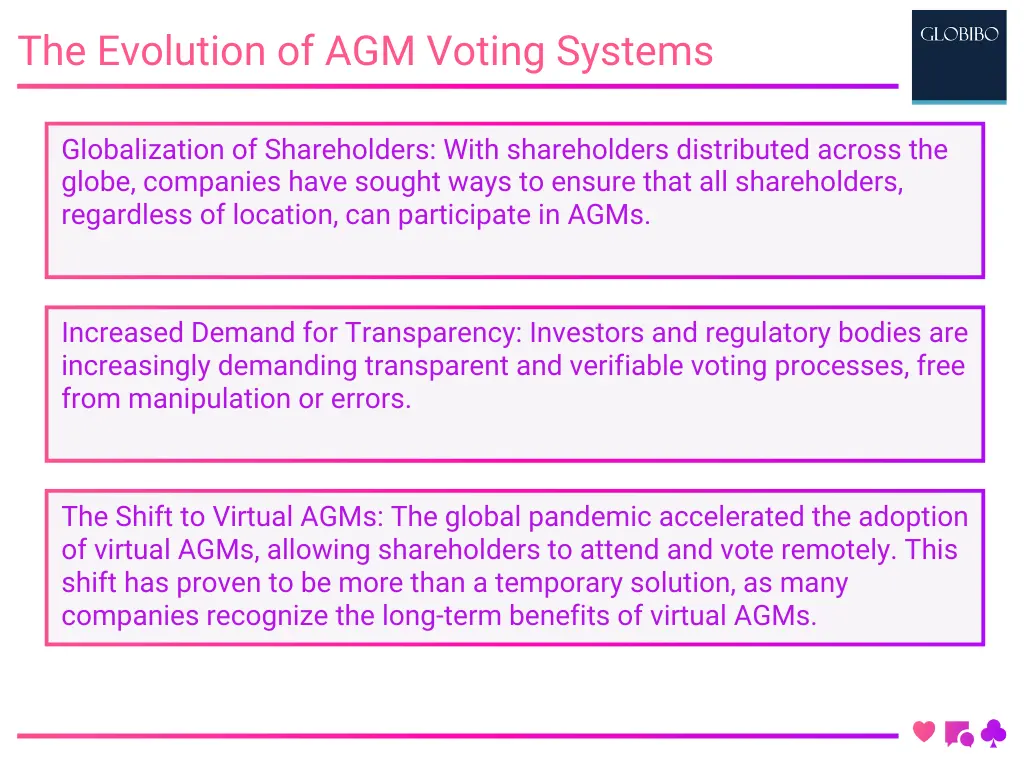
The Evolution of AGM Voting Systems
The transition from traditional, manual voting methods to advanced digital platforms has been driven by several key factors:
- Globalization of Shareholders: With shareholders distributed across the globe, companies have sought ways to ensure that all shareholders, regardless of location, can participate in AGMs.
- Increased Demand for Transparency: Investors and regulatory bodies are increasingly demanding transparent and verifiable voting processes, free from manipulation or errors.
- The Shift to Virtual AGMs: The global pandemic accelerated the adoption of virtual AGMs, allowing shareholders to attend and vote remotely. This shift has proven to be more than a temporary solution, as many companies recognize the long-term benefits of virtual AGMs.
Components of Innovative AGM Voting Systems
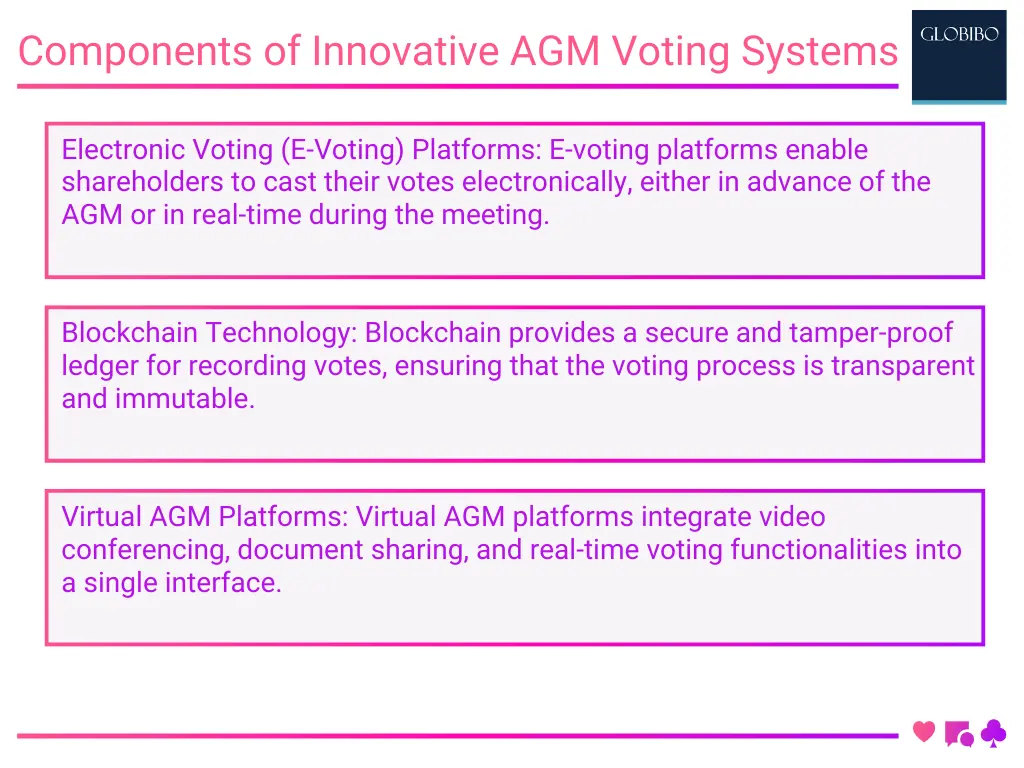
Modern AGM voting systems comprise several integrated technologies designed to facilitate seamless participation and enhance the security of the voting process. Key components include:
- Electronic Voting (E-Voting) Platforms: E-voting platforms enable shareholders to cast their votes electronically, either in advance of the AGM or in real-time during the meeting. These platforms can be accessed via web portals, mobile applications, or integrated directly into virtual AGM platforms. Advanced e-voting systems also support features like live vote tracking and instant result tabulation.
- Blockchain Technology: Blockchain provides a secure and tamper-proof ledger for recording votes, ensuring that the voting process is transparent and immutable. Each vote is recorded as a block in the blockchain, making it impossible to alter or delete votes without detection. Blockchain also enhances trust in the voting process, as shareholders can independently verify the integrity of their votes.
- Virtual AGM Platforms: Virtual AGM platforms integrate video conferencing, document sharing, and real-time voting functionalities into a single interface. These platforms allow shareholders to attend AGMs remotely, ask questions, participate in discussions, and cast votes in real-time. Virtual AGMs eliminate geographical barriers and increase accessibility, especially for retail shareholders.
- Mobile Voting Applications: Mobile apps designed for AGM voting offer shareholders a convenient way to vote from their smartphones or tablets. These apps often come with features like push notifications, voting reminders, and personalized dashboards that display relevant documents and voting options.
- Data Analytics and Reporting Tools: Innovative AGM systems often include advanced data analytics and reporting tools that help companies analyze voting patterns, shareholder engagement, and meeting effectiveness. These insights can be used to refine future AGMs and enhance overall shareholder relations.
Advantages of Innovative AGM Voting Systems
Implementing modern AGM voting systems yields several notable benefits, many of which directly address the shortcomings of traditional voting methods.
- Increased Shareholder Participation: Digital voting systems remove geographical and physical barriers, allowing shareholders to participate in AGMs from any location. This inclusivity is particularly beneficial for retail investors, who may otherwise find it difficult to attend in-person meetings.
- Enhanced Security and Transparency: Technologies like blockchain and encryption ensure that votes are recorded securely and cannot be tampered with. The transparency of digital voting platforms also allows shareholders to verify their votes independently.
- Real-Time Voting and Results: E-voting platforms enable real-time vote casting and instant result tabulation, reducing the time required to finalize voting outcomes. This real-time capability ensures that AGMs can proceed efficiently and without delays.
- Cost Savings: Virtual AGMs and digital voting systems significantly reduce the costs associated with organizing in-person meetings, such as venue rental, travel expenses, and printing of materials. These savings can be redirected towards enhancing shareholder communication and engagement.
- Data-Driven Insights: The data analytics tools embedded in modern AGM systems provide valuable insights into shareholder behavior, engagement levels, and voting patterns. Companies can use this information to improve future AGMs and tailor their communication strategies to better meet shareholder needs.
Traditional vs. Innovative AGM Voting Systems
| Aspect | Traditional AGM Voting | Innovative AGM Voting Systems |
| Accessibility | Limited to physical attendance | Global access via virtual platforms |
| Voting Method | Paper ballots or manual voting | E-voting, mobile apps, blockchain |
| Transparency | Limited, manual vote counting | High, with verifiable blockchain records |
| Security | Prone to errors and tampering | Encrypted, blockchain-secured votes |
| Cost | High (venue, logistics, printed materials) | Lower (virtual platforms, e-documents) |
| Speed of Results | Delayed due to manual counting | Instantaneous with digital platforms |
| Data Insights | Minimal, anecdotal evidence | Rich analytics and shareholder reports |
Challenges of Implementing Innovative AGM Voting Systems
While the benefits of modern AGM voting systems are evident, their implementation is not without challenges. Companies need to address several hurdles to ensure a successful transition from traditional methods:
- Technological Barriers: Not all shareholders, especially older individuals, may be comfortable using digital platforms. Ensuring user-friendly interfaces and providing adequate support is crucial for broad adoption.
- Regulatory Compliance: Different countries have varying regulations regarding electronic voting and virtual AGMs. Companies need to navigate this complex landscape to ensure that their digital voting systems comply with all relevant laws.
- Cybersecurity Risks: While technologies like blockchain offer enhanced security, no system is immune to cyber threats. Companies must invest in robust cybersecurity measures to protect against potential breaches or attacks on their voting systems.
- Digital Divide: Some shareholders may not have access to the necessary technology or internet connectivity to participate in digital voting. Companies should consider providing alternative options, such as hybrid AGMs, to ensure inclusivity.
- Cost of Implementation: Although innovative AGM systems can save costs in the long run, the initial setup, including the purchase of software and integration of technologies, can be expensive. Companies need to weigh these upfront costs against the potential benefits.
The Future of AGM Voting Systems: Virtual AGMs as the New Norm
The shift towards digital and virtual AGMs has sparked discussions about the future of shareholder meetings. As companies increasingly recognize the advantages of virtual AGMs, these meetings are likely to become the new standard in corporate governance.
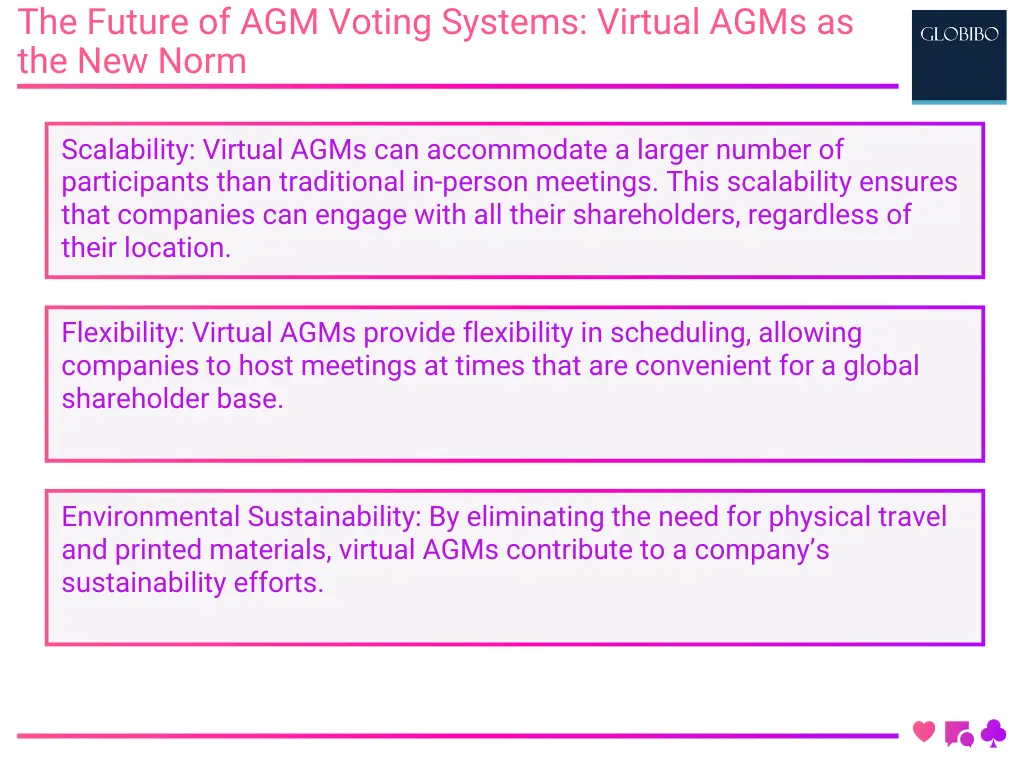
Virtual AGMs offer several key advantages that make them an appealing choice for companies looking to enhance shareholder participation:
- Scalability: Virtual AGMs can accommodate a larger number of participants than traditional in-person meetings. This scalability ensures that companies can engage with all their shareholders, regardless of their location.
- Flexibility: Virtual AGMs provide flexibility in scheduling, allowing companies to host meetings at times that are convenient for a global shareholder base. Additionally, virtual meetings can be recorded and made available for on-demand viewing, further enhancing accessibility.
- Environmental Sustainability: By eliminating the need for physical travel and printed materials, virtual AGMs contribute to a company’s sustainability efforts. This aligns with the growing emphasis on Environmental, Social, and Governance (ESG) criteria among investors.
- Interactive Features: Advanced virtual AGM platforms include interactive features such as live Q&A sessions, polls, and breakout rooms, which replicate the engagement opportunities of in-person meetings. These features enhance the shareholder experience and foster a more interactive dialogue with company leadership.
Key Features of Virtual AGM Platforms
- Integrated Voting and Real-Time Results: Allow shareholders to cast votes during the AGM with results displayed instantly.
- Live Streaming and On-Demand Access: Broadcast the AGM live, with recordings available for later viewing.
- Interactive Q&A and Polling: Facilitate engagement through live Q&A sessions, polls, and surveys during the meeting.
- Document Sharing and Downloads: Provide shareholders with easy access to documents, presentations, and reports directly from the platform.
- Security and Compliance: Ensure that all voting and participation processes are secure and compliant with relevant regulations.
Case Study: The Impact of Virtual AGMs on Shareholder Participation
A comprehensive analysis of virtual AGMs conducted across various industries reveals significant improvements in shareholder engagement and participation. In particular, companies that transitioned to virtual AGMs reported the following key outcomes:
- Participation Rate Increase: A notable increase in the participation rate was observed, with virtual AGMs attracting 30-50% more shareholders compared to traditional AGMs.
- Geographical Inclusivity: Shareholders from over 50 countries participated in virtual AGMs, indicating a broad global reach that was not possible with in-person meetings.
- Improved Voting Efficiency: E-voting systems enabled real-time vote counting, reducing the time required to finalize results by 70%. Shareholders appreciated the transparency and immediacy of vote confirmation.
- Cost Savings: Companies reported a 40-60% reduction in AGM-related costs, with savings reinvested into improving shareholder communication channels and post-meeting analysis.
Best Practices for Implementing Innovative AGM Voting Systems
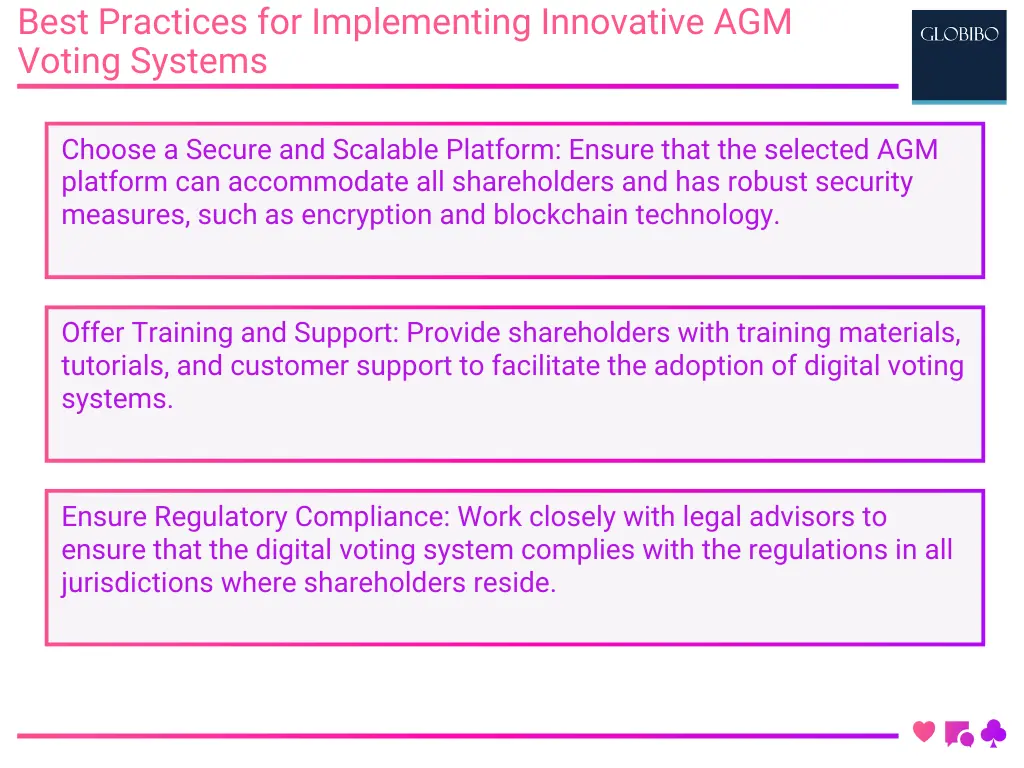
- Choose a Secure and Scalable Platform: Ensure that the selected AGM platform can accommodate all shareholders and has robust security measures, such as encryption and blockchain technology.
- Offer Training and Support: Provide shareholders with training materials, tutorials, and customer support to facilitate the adoption of digital voting systems.
- Ensure Regulatory Compliance: Work closely with legal advisors to ensure that the digital voting system complies with the regulations in all jurisdictions where shareholders reside.
- Plan for Contingencies: Have backup systems in place to handle potential technical issues during the AGM, such as server outages or connectivity problems.
- Communicate Clearly: Keep shareholders informed about the voting process, timelines, and any technical requirements well in advance of the AGM.
Conclusion for AGM Voting Systems
Innovative AGM voting systems, supported by technologies like e-voting, blockchain, and virtual AGM platforms, have revolutionized shareholder participation. By removing geographical barriers, enhancing security and transparency, and providing real-time results, these systems empower shareholders to actively engage in corporate governance.
As virtual AGMs become the norm, companies must continue to refine their digital voting systems to meet the evolving needs of their shareholders. By adopting best practices and addressing potential challenges, organizations can ensure that their AGMs remain a vital and inclusive forum for shareholder engagement in the digital age.
Academic Reference for AGM Voting Systems
- Bringing the AGM to the 21st century: Blockchain and smart contracting tech for shareholder involvement
- [PDF] Shareholder activism at European AGMs: Voting turnout and behaviour of (small) shareholders
- Revisiting shareholder activism at AGMs: Voting determinants of large and small shareholders
- [HTML] Blockchain and smart contracting for the shareholder community
- Executives’ behaviour and innovation in corporate governance: The case of internet voting at shareholders‘ general meetings in French listed companies
- The participation of the small shareholder in the annual general meeting: a reflection of good corporate governance?
- The effectiveness of e-corporate governance: an exploratory study of internet voting at shareholders‘ annual meetings in France
- [PDF] An Empirical Study of Shareholders Rights in Australia: Theory and Practice
- The moderating role of electronic voting system on board ownership and board effectiveness
- [PDF] Corporate profitability and shareholder meeting participation in Italian listed companies

Rick Lee
Project Manager – Event Technology
With over 10 years of experience in event technology, Rick is an expert in integrating cutting-edge tech solutions for seamless event execution. His expertise includes audio-visual setups, interactive displays, and live-streaming technologies. Rick’s innovative approach ensures every event is technologically advanced and highly engaging.
Youtube Video on AGM Voting Systems
Key Articles for AGM Voting Systems
- Streamlining AGM Registration: Best Practices for a Smooth Process
- How Virtual AGMs Are Transforming Corporate Governance
- Choosing the Right Video Streaming Platform for Your Virtual AGM
- Top Tips for Hosting a Successful Hybrid AGM
- Innovative AGM Voting Systems: Enhancing Shareholder Participation
- Ensuring Security and Compliance in Virtual AGMs
- Integrating Q&A Sessions into Virtual AGMs: Engaging Remote Shareholders
- Virtual AGMs and ESG: Engaging Shareholders on Sustainability Issues
- Enhancing Transparency with Live Voting and Instant Results During AGMs
- AGM Documentation: Secure Sharing of Reports and Presentations Online
Contacts
Certification

Testimonials



Event Technology