Ensuring Security and Compliance in Virtual AGMs
The shift to virtual Annual General Meetings (AGMs) has become a significant trend, driven by the ongoing digital transformation and the global need for remote connectivity. Virtual AGMs offer convenience, flexibility, and broader participation. However, as with any digital endeavor, security and compliance are paramount concerns. Ensuring that virtual AGMs are secure and meet all regulatory requirements requires a thorough understanding of cybersecurity, legal frameworks, and the technology infrastructure that supports these meetings. This article delves into the critical aspects of ensuring security and compliance in virtual AGMs.
The Rise of Virtual AGMs
Virtual AGMs, which allow shareholders and stakeholders to participate remotely, are now a norm in corporate governance. They provide advantages such as reduced travel costs, enhanced accessibility, and the ability to reach a global audience. However, this format also introduces new risks, particularly in the realms of data security, privacy, and regulatory compliance. As businesses transition from traditional physical AGMs to virtual platforms, addressing these risks becomes imperative.
Key Security Concerns in Virtual AGMs
1. Data Privacy and Confidentiality
Virtual AGMs involve the exchange of sensitive information, including financial reports, voting results, and proprietary data. Protecting this information from unauthorized access or data breaches is a top priority. The privacy of participants, especially shareholders, must be safeguarded to comply with data protection regulations such as the General Data Protection Regulation (GDPR) and the California Consumer Privacy Act (CCPA).
Mitigation Strategies:
- Encryption: Implement end-to-end encryption for all communications during the AGM. This ensures that data transmitted between participants and the hosting platform is secure.
- Access Controls: Use role-based access control (RBAC) to restrict access to sensitive information. Only authorized personnel should have access to specific data or features within the virtual AGM platform.
- Anonymization: Where appropriate, anonymize participant data to prevent identification in case of a data breach.

2. Identity Verification and Fraud Prevention
In a virtual setting, ensuring that the individuals participating in the AGM are who they claim to be is crucial. Identity fraud can lead to unauthorized voting, access to confidential information, or even disruptions to the meeting itself.
Mitigation Strategies:
- Multi-Factor Authentication (MFA): Implement MFA for participants to verify their identities. This could involve a combination of passwords, biometric verification, and one-time passcodes sent to mobile devices.
- Digital Signatures: Use digital signatures to authenticate participants’ votes and decisions. This not only ensures security but also creates an auditable trail.
- Monitoring and Auditing: Implement continuous monitoring of the virtual AGM platform to detect suspicious activities. Audit logs should be maintained to track actions performed during the meeting.
3. Cybersecurity Threats
Virtual AGMs are susceptible to various cybersecurity threats, including Distributed Denial of Service (DDoS) attacks, malware, phishing, and unauthorized access. These threats can disrupt meetings, compromise data integrity, and cause reputational damage to the organization.
Mitigation Strategies:
- Secure Networks: Ensure that the virtual AGM is conducted over a secure, encrypted network. Participants should be encouraged to join via secure internet connections to reduce the risk of interception.
- Regular Security Audits: Conduct regular security audits of the virtual AGM platform and infrastructure to identify and mitigate vulnerabilities.
- Incident Response Plan: Develop and implement an incident response plan specific to the virtual AGM. This plan should outline steps to be taken in the event of a security breach, including communication with participants and remediation efforts.
4. Platform Security and Reliability
The virtual platform hosting the AGM must be secure and reliable. Any vulnerabilities within the platform itself could lead to unauthorized access, data leaks, or disruptions to the meeting.
Mitigation Strategies:
- Third-Party Security Assessments: Engage third-party security experts to assess the virtual AGM platform for vulnerabilities. This can help identify and rectify weaknesses before they can be exploited.
- Backup Systems: Implement backup systems to ensure the continuity of the meeting in the event of technical issues or attacks. Redundant servers and failover systems should be in place.
- Platform Certification: Choose a platform that complies with industry security standards, such as ISO/IEC 27001 for Information Security Management or SOC 2 for data security, availability, processing integrity, confidentiality, and privacy.
Compliance Challenges in Virtual AGMs
Compliance is a complex issue in virtual AGMs, as regulations vary by region and industry. Ensuring compliance involves adhering to laws governing corporate governance, shareholder rights, and data protection.
1. Corporate Governance Regulations
Different countries have varying regulations regarding how AGMs should be conducted. For example, in the European Union, the Shareholders’ Rights Directive mandates certain practices that may differ from the regulations in the United States under the Securities and Exchange Commission (SEC).
Mitigation Strategies:
- Legal Consultation: Consult with legal experts to ensure that the virtual AGM complies with the corporate governance regulations in all jurisdictions where the company operates.
- Documentation: Maintain comprehensive records of the AGM proceedings, including minutes, voting results, and communications, to demonstrate compliance in case of audits or legal scrutiny.
- Shareholder Rights: Ensure that the virtual AGM platform provides shareholders with the same rights and opportunities they would have in a physical meeting, such as the ability to ask questions, vote, and access information.

2. Data Protection Laws
Data protection laws, such as the GDPR in the EU and the CCPA in California, impose strict requirements on how personal data is collected, processed, and stored. Virtual AGMs, which involve the handling of shareholder and participant data, must comply with these laws.
Mitigation Strategies:
- Data Mapping: Map out the flow of personal data within the virtual AGM platform to ensure compliance with data protection laws. Identify where data is stored, processed, and transmitted.
- Data Minimization: Collect only the data necessary for the AGM and limit its use to the purposes outlined in the privacy policy. Unnecessary data collection increases the risk of non-compliance.
- Participant Consent: Obtain explicit consent from participants for the collection and use of their data during the AGM. Provide clear and transparent information about how their data will be handled.
Key Security Features for Virtual AGM Platforms
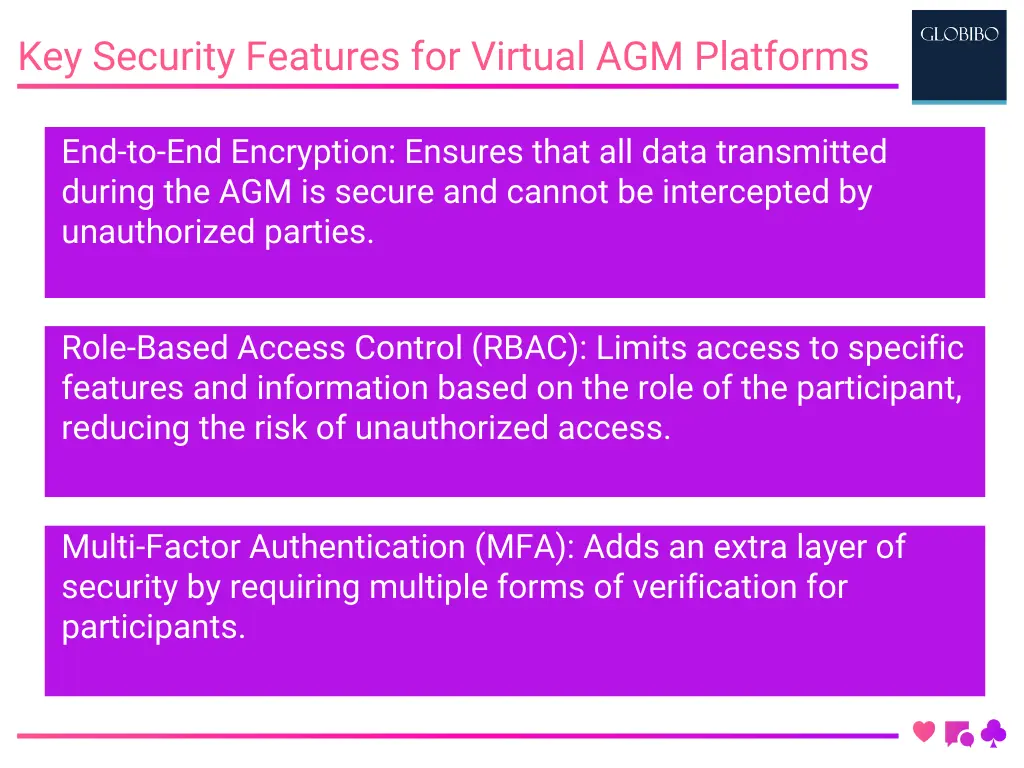
- End-to-End Encryption: Ensures that all data transmitted during the AGM is secure and cannot be intercepted by unauthorized parties.
- Role-Based Access Control (RBAC): Limits access to specific features and information based on the role of the participant, reducing the risk of unauthorized access.
- Multi-Factor Authentication (MFA): Adds an extra layer of security by requiring multiple forms of verification for participants.
- Digital Signatures: Authenticates votes and actions, providing a secure and auditable record of decisions made during the AGM.
- Continuous Monitoring and Incident Response: Detects and responds to cybersecurity threats in real time, ensuring the integrity of the meeting.
Compliance Best Practices for Virtual AGMs
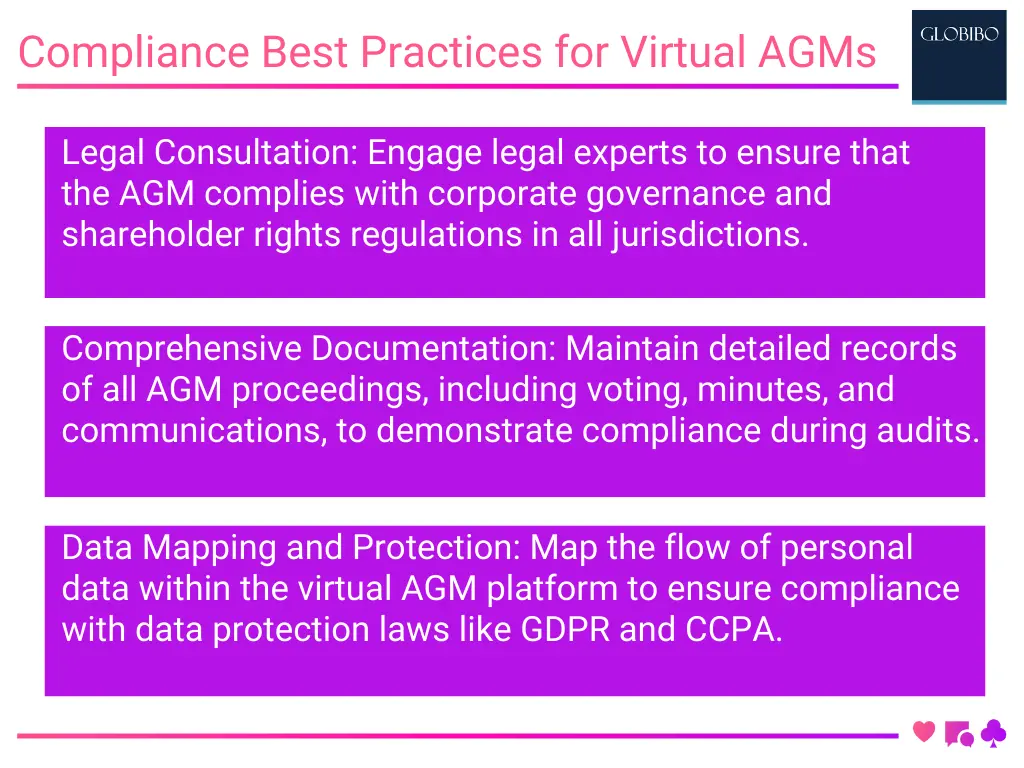
- Legal Consultation: Engage legal experts to ensure that the AGM complies with corporate governance and shareholder rights regulations in all jurisdictions.
- Comprehensive Documentation: Maintain detailed records of all AGM proceedings, including voting, minutes, and communications, to demonstrate compliance during audits.
- Data Mapping and Protection: Map the flow of personal data within the virtual AGM platform to ensure compliance with data protection laws like GDPR and CCPA.
- Explicit Consent: Obtain clear consent from participants for the collection and use of their data, in line with the company’s privacy policy.
- Platform Certification: Choose platforms that meet industry standards for security and data protection, such as ISO/IEC 27001 or SOC 2 certification.
Ensuring Security Through Advanced Technologies
To secure virtual AGMs effectively, companies must leverage advanced technologies such as blockchain, artificial intelligence (AI), and machine learning (ML).
1. Blockchain for Immutable Records
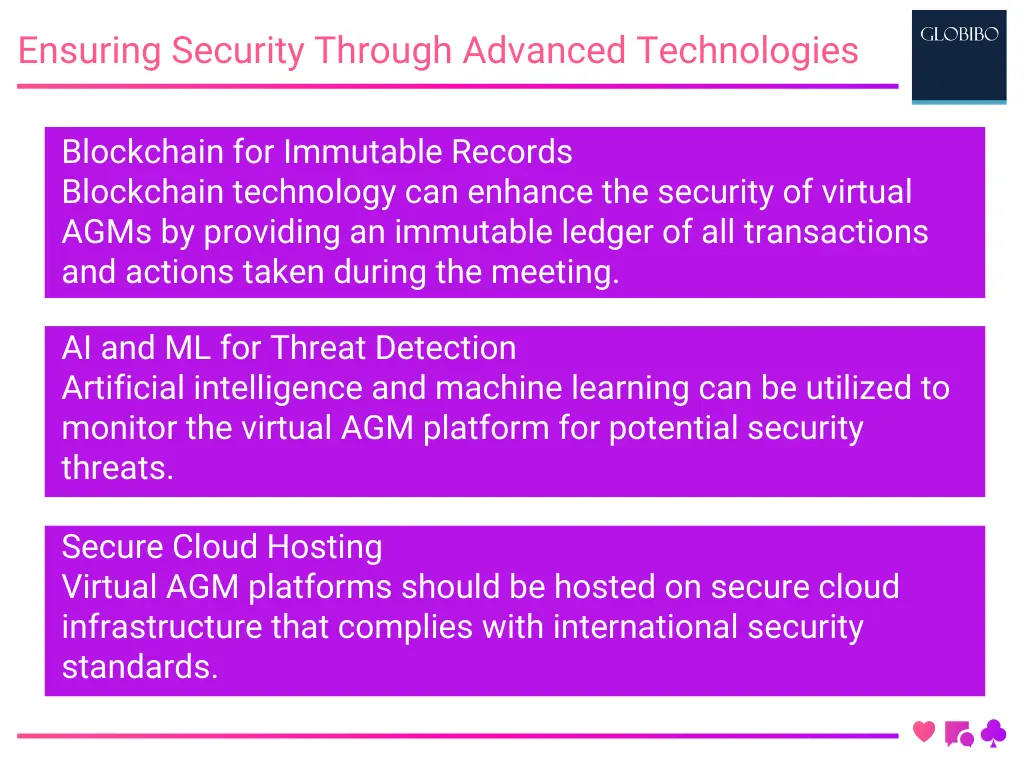
Blockchain technology can enhance the security of virtual AGMs by providing an immutable ledger of all transactions and actions taken during the meeting. This can be particularly useful for vote tracking, ensuring that all votes are recorded accurately and cannot be altered after submission.
2. AI and ML for Threat Detection
Artificial intelligence and machine learning can be utilized to monitor the virtual AGM platform for potential security threats. AI algorithms can detect anomalies in participant behavior, such as unusual login patterns or unauthorized access attempts, and respond to threats in real time.
3. Secure Cloud Hosting
Virtual AGM platforms should be hosted on secure cloud infrastructure that complies with international security standards. Cloud providers should offer features such as data encryption, secure access controls, and redundancy to ensure that the AGM can proceed smoothly even in the face of technical challenges.
Comparison of Virtual AGM Security Features
| Security Feature | Description | Compliance Implications |
| End-to-End Encryption | Encrypts data from the sender to the receiver, ensuring that it cannot be intercepted. | Essential for GDPR and CCPA compliance; protects participant data. |
| Multi-Factor Authentication | Requires multiple forms of verification for login, reducing the risk of unauthorized access. | Aligns with data protection laws by securing participant identities. |
| Role-Based Access Control | Limits access to specific features based on user roles. | Helps meet corporate governance standards by controlling access to sensitive information. |
| Digital Signatures | Provides secure and verifiable participant authentication. | Ensures the authenticity of votes and decisions, meeting compliance requirements. |
| Incident Response Plan | Prepares for security breaches by outlining steps for mitigation and communication. | Critical for demonstrating compliance with security and data protection regulations. |
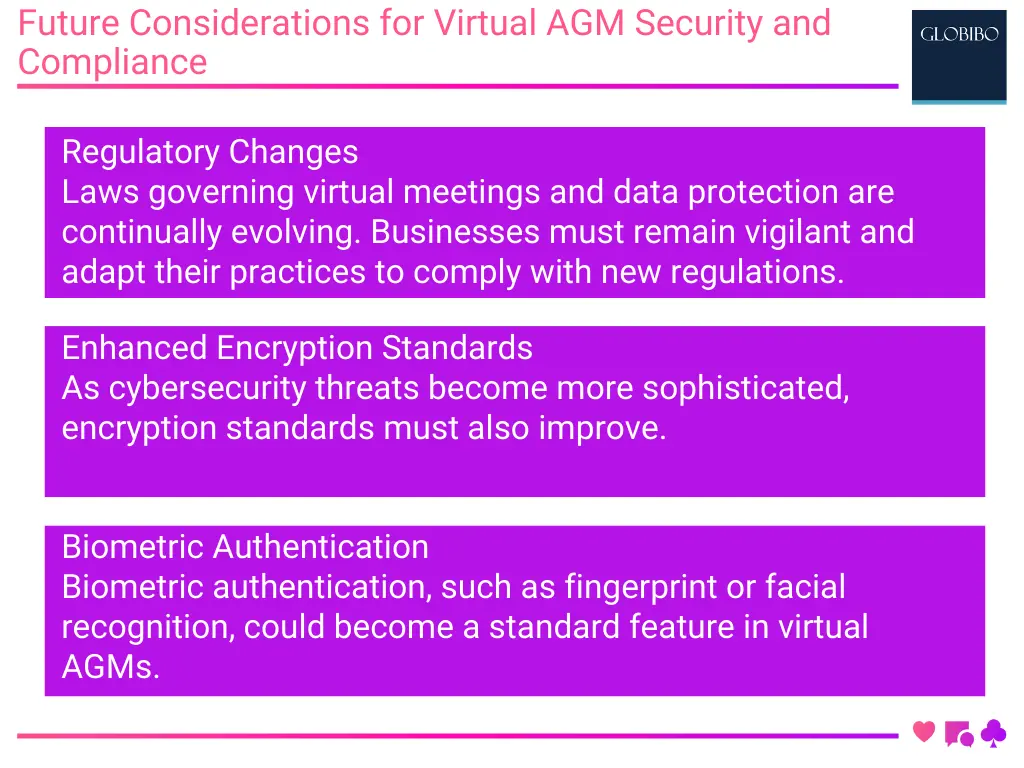
Future Considerations for Virtual AGM Security and Compliance
As technology evolves, so will the security and compliance challenges associated with virtual AGMs. Companies must stay ahead of emerging threats by continuously updating their security protocols and ensuring that their virtual AGM platforms comply with the latest regulatory requirements.
1. Regulatory Changes
Laws governing virtual meetings and data protection are continually evolving. Businesses must remain vigilant and adapt their practices to comply with new regulations. Regular legal reviews and updates to corporate governance policies are essential to stay compliant in the changing landscape.
2. Enhanced Encryption Standards
As cybersecurity threats become more sophisticated, encryption standards must also improve. Companies should adopt the latest encryption technologies to ensure that their virtual AGMs remain secure from emerging threats.
3. Biometric Authentication
Biometric authentication, such as fingerprint or facial recognition, could become a standard feature in virtual AGMs. This technology would provide an additional layer of security by verifying participants’ identities through unique biological characteristics.
Conclusion for Virtual AGMs
Virtual AGMs offer significant advantages but also present unique security and compliance challenges. By adopting a comprehensive approach that includes robust security measures, compliance with data protection laws, and the use of advanced technologies, companies can ensure that their virtual AGMs are secure and compliant. The future of AGMs will likely continue to be virtual or hybrid, making it crucial for organizations to stay informed about the latest security and compliance trends to protect their stakeholders and maintain corporate integrity.
Academic Reference for Virtual AGMs
- Virtual AGM Requirements: Industrial And Provident Societies.
- [DOC] Evaluating the Legality of Virtual Meetings under the Companies and Allied Matters Act of Nigeria
- [PDF] AGM.
- [PDF] Annual General Meetings in the Era of COVID-19 Pandemic: Law and Practice in Tanzania
- Compliance with Statutory Requirements During the COVID-19 Pandemic
- Cyberspace Resilience and Corporate Governance: Company Secretary as an Enabler
- Annual General Meetings of Medical Schemes: Importance and Challenges Associated with Limited Member Participation
- Acting for you, October 2021
- The virtual shareholders meeting: How to make it work
- Towards a Virtual General Meeting:’I accept’or ‘I decline’?

Rick Lee
Project Manager – Event Technology
With over 10 years of experience in event technology, Rick is an expert in integrating cutting-edge tech solutions for seamless event execution. His expertise includes audio-visual setups, interactive displays, and live-streaming technologies. Rick’s innovative approach ensures every event is technologically advanced and highly engaging.
Youtube Video on Virtual AGM
Key Articles for Hybrid AGM
- Streamlining AGM Registration: Best Practices for a Smooth Process
- How Virtual AGMs Are Transforming Corporate Governance
- Choosing the Right Video Streaming Platform for Your Virtual AGM
- Top Tips for Hosting a Successful Hybrid AGM
- Innovative AGM Voting Systems: Enhancing Shareholder Participation
- Ensuring Security and Compliance in Virtual AGMs
- Integrating Q&A Sessions into Virtual AGMs: Engaging Remote Shareholders
- Virtual AGMs and ESG: Engaging Shareholders on Sustainability Issues
- Enhancing Transparency with Live Voting and Instant Results During AGMs
- AGM Documentation: Secure Sharing of Reports and Presentations Online
Contacts
Certification

Testimonials



Event Technology