Choosing the Right Race Timing System
Selecting the appropriate race timing system is crucial for ensuring accurate and efficient timing during competitive events. A well-chosen race timing system can significantly enhance the experience for participants, organizers, and spectators alike. This article delves into the various factors to consider when choosing a race timing system, including the types of systems available, their functionalities, and the latest technologies shaping this essential aspect of event management.
Understanding Race Timing System
A race timing system captures and records the time taken by participants to complete a race. It typically comprises hardware and software components that work together to ensure accurate timekeeping and data processing. Various types of race timing systems cater to different events and needs, from small community races to large marathons or triathlons.
Key Components of a Race Timing System

- Timing Hardware: This includes the physical devices used to measure time, such as timing mats, transponders, and cameras.
- Timing Software: Software is used for data processing, result generation, and reporting. It is essential for integrating timing hardware and facilitating the flow of information.
- Data Transmission: Reliable data transmission methods (wired or wireless) are vital for real-time updates and results reporting.
- Reporting Tools: These are used to generate comprehensive reports on participant performance and race statistics.
Factors to Consider When Choosing a Race Timing System

When selecting a race timing system, organizers should evaluate several critical factors to ensure they choose the best fit for their specific event requirements. The following sections outline the essential considerations.
Event Type and Size
Different events may require varying timing systems based on their scale and nature. For example:
- Small Community Events: Typically require simpler systems, such as manual timing or basic digital stopwatches.
- Large Races: Events like marathons, triathlons, or cycling races need more sophisticated systems capable of handling thousands of participants and providing real-time updates.
Timing Technology
Understanding the various timing technologies available is essential for making an informed choice. Common technologies include:
- RFID (Radio Frequency Identification): Utilizes passive tags attached to race bibs or shoes to capture time as participants cross timing mats.
- Chip Timing: Involves active transponders that emit signals to timing mats, providing accurate and instantaneous timing data.
- GPS Tracking: Allows for real-time participant tracking using GPS devices or smartphone applications, ideal for outdoor events.
Accuracy and Reliability
The primary purpose of a race timing system is to provide accurate results. Factors affecting accuracy include:
- Type of Technology Used: Some technologies offer higher precision than others. For instance, RFID and chip timing are generally more reliable than manual timing.
- Environmental Conditions: Outdoor events may face signal interference, impacting timing accuracy. Ensure the chosen system performs well under varying conditions.
Integration and Compatibility
A race timing system should seamlessly integrate with other event management tools. Consider the following:
- Registration Software: Ensure compatibility with participant registration systems to streamline data flow and minimize manual entry errors.
- Results Reporting: The timing system should provide easy access to results and reports, either through a dedicated platform or integration with existing event management software.
Cost Considerations
Budget constraints are often a significant factor when choosing a race timing system. Assess the total cost of ownership, including:
- Initial Setup Costs: The price of purchasing or renting equipment and software.
- Operational Costs: Ongoing expenses for maintenance, support, and upgrades.
- Return on Investment (ROI): Consider the potential benefits in terms of participant satisfaction and organizational efficiency.
Technical Support and Training
Having access to reliable technical support is essential for any race timing technology. Organizers should evaluate:
- Availability of Support: Ensure the provider offers timely assistance during events.
- Training for Staff: The complexity of some timing systems may necessitate training for staff and volunteers, so inquire about training options before making a selection.
User Experience
A good user experience is critical for both participants and organizers. Key aspects to consider include:
- Ease of Use: The system should be intuitive, allowing quick adaptation by event staff and participants.
- Participant Interaction: Look for systems that offer features such as live tracking, result notifications, and user-friendly interfaces for participants.
Common Types of Race Timing System
| Timing System | Description | Best For |
| Manual Timing | Basic stopwatches operated by volunteers. | Small community events |
| RFID Timing | Passive RFID tags used for accurate timing at checkpoints. | Large races with multiple checkpoints |
| Chip Timing | Active transponders providing real-time timing data. | Marathons and triathlons |
| GPS Tracking | Real-time tracking via GPS devices or apps for outdoor events. | Events with varied courses |
| Photo Finish | High-speed cameras capturing images at the finish line for accuracy. | Competitive events requiring precision |
Challenges in Choosing a Race Timing System
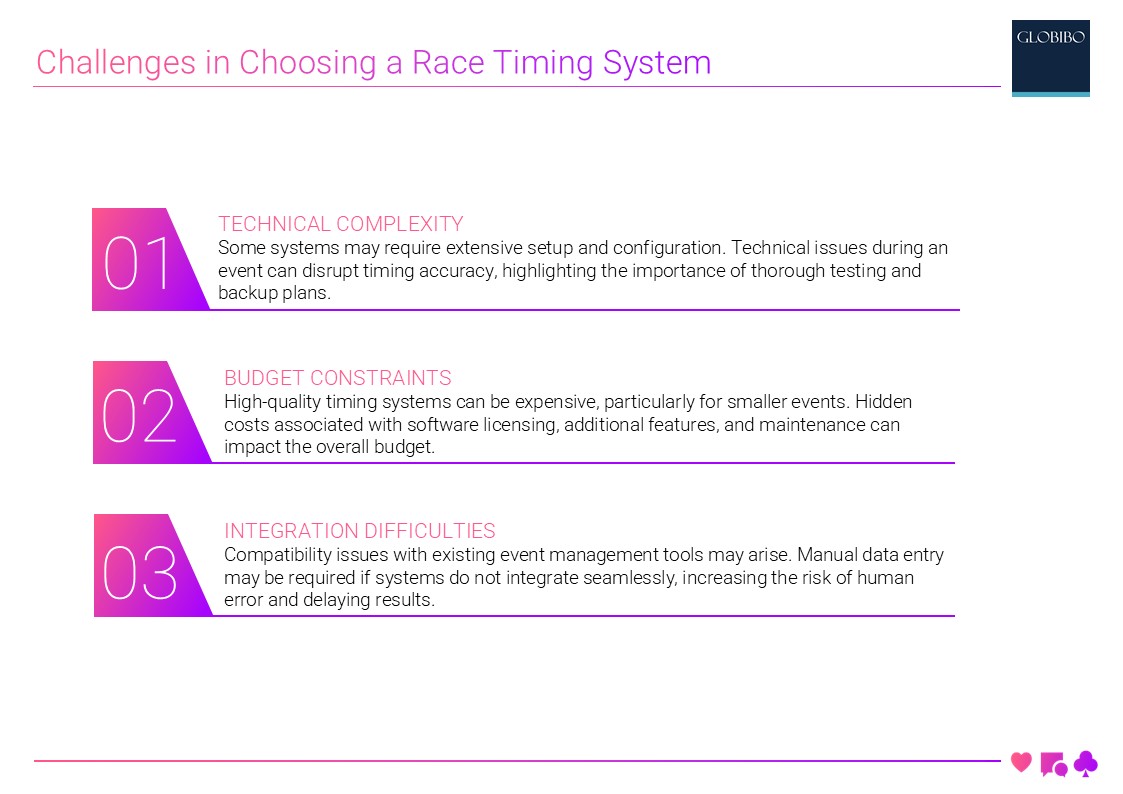
- Technical Complexity:
- Some systems may require extensive setup and configuration.
- Technical issues during an event can disrupt timing accuracy.
- Budget Constraints:
- High-quality timing systems can be expensive, particularly for smaller events.
- Hidden costs associated with software licensing or additional features.
- Integration Difficulties:
- Compatibility issues with existing event management tools may arise.
- Manual data entry may be required if systems do not integrate seamlessly.
- Training Requirements:
- Staff may need training to operate advanced timing systems effectively.
- The learning curve can impact the event’s efficiency if not adequately addressed.
The Process of Implementing a Race Timing System
Implementing a race timing system involves several critical steps to ensure a smooth experience for both organizers and participants.
Assess Requirements
Organizers should begin by assessing the event’s requirements, considering factors such as:
- Type of Event: What is the nature of the race?
- Number of Participants: How many athletes are expected?
- Geographic Location: Will the event be held indoors or outdoors?
Research and Compare System
After assessing requirements, the next step is to research and compare various race timing systems. This process involves:
- Identifying Providers: Look for providers that specialize in race timing systems.
- Reading Reviews: Gather insights from other event organizers regarding their experiences with different systems.
- Requesting Demonstrations: If possible, request live demonstrations or trials to evaluate the systems’ functionalities.
Budget Planning
Once a shortlist of potential systems is established, organizers should plan their budget carefully, factoring in all costs associated with:
- Equipment and Software: Initial costs for purchasing or renting timing hardware and software licenses.
- Training and Support: Ongoing costs related to training staff and technical support during the event.
- Contingency Fund: Allocating funds for unexpected expenses that may arise.
System Configuration
Configuring the chosen race timing system is crucial for ensuring that it operates smoothly during the event. This includes:
- Hardware Setup: Installing timing mats, cameras, and other equipment at the designated locations.
- Software Configuration: Setting up the software to manage participant data and results reporting.
- Testing: Conducting thorough tests to identify any potential issues before race day.
Event Execution
On race day, the focus shifts to executing the event successfully. Key tasks include:
- Monitoring Equipment: Ensure that all timing hardware is functioning correctly and is positioned accurately.
- Data Management: Monitor data flow to ensure results are being recorded and transmitted correctly.
- Providing Support: Technical support should be readily available to address any issues that may arise.
Post-Event Analysis
After the event concludes, a thorough analysis is essential for evaluating the performance of the timing system. This involves:
- Reviewing Results: Assessing the accuracy and timeliness of results generated by the system.
- Gathering Feedback: Collecting feedback from participants and staff regarding their experience with the timing system.
- Identifying Areas for Improvement: Analyzing any challenges faced during the event to enhance future timing system implementations.
Future Trends in Race Timing System
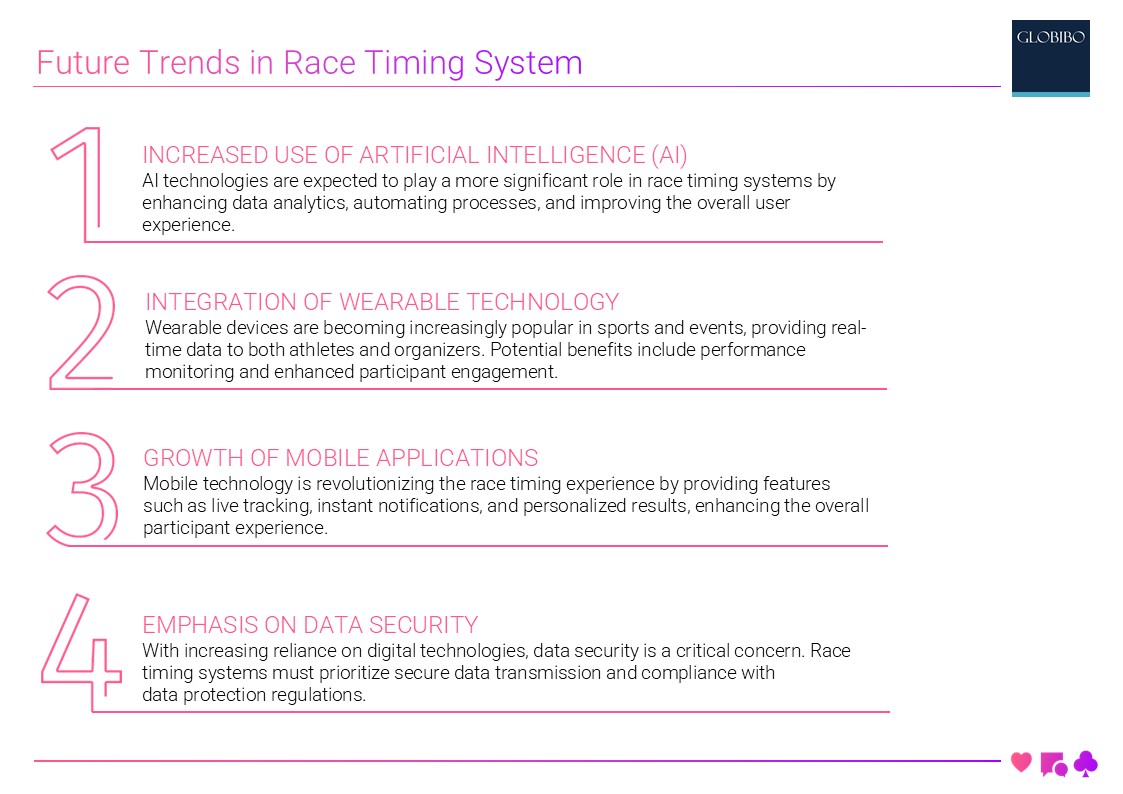
As technology continues to evolve, several trends are shaping the future of race timing systems. Key trends include:
Increased Use of Artificial Intelligence (AI)
AI technologies are expected to play a more significant role in race timing systems by:
- Enhancing Data Analytics: Providing deeper insights into participant performance through advanced analytics.
- Automating Processes: Streamlining data entry and result processing through intelligent algorithms.
Integration of Wearable Technology
Wearable devices are becoming increasingly popular in sports and events, providing real-time data to both athletes and organizers. Potential benefits include:
- Performance Monitoring: Real-time biometric data, such as heart rate and pace, can be used to assess athlete performance during races.
- Enhanced Participant Engagement: Wearables can provide participants with personalized feedback and insights post-race.
Growth of Mobile Applications
Mobile technology is revolutionizing the race timing experience by providing features such as:
- Live Tracking: Participants and spectators can monitor progress in real-time through dedicated mobile applications.
- Instant Notifications: Participants receive notifications upon crossing checkpoints or finishing, enhancing overall engagement.
Emphasis on Data Security
With increasing reliance on digital technologies, data security is a critical concern. Race timing systems must prioritize:
- Secure Data Transmission: Implementing robust encryption protocols to protect sensitive participant data.
- Compliance with Regulations: Adhering to data protection regulations to ensure the privacy of participants’ information.
Summary of Race Timing System
Choosing the right race timing system is vital for the success of any competitive event. By considering factors such as event size, timing technology, and budget constraints, organizers can make informed decisions that enhance the overall experience for participants and spectators alike. With advancements in technology and a focus on user experience, race timing systems are poised to become even more integral to event management in the future. Embracing these innovations will ultimately lead to improved accuracy, efficiency, and participant satisfaction.

Rick Lee
Project Manager – Event Technology
With over 10 years of experience in event technology, Rick is an expert in integrating cutting-edge tech solutions for seamless event execution. His expertise includes audio-visual setups, interactive displays, and live-streaming technologies. Rick’s innovative approach ensures every event is technologically advanced and highly engaging.
YouTube Video on Race Timing System



Academic References for Race Timing System
- [PDF] Open Source RFID race timing system
- An Environmentally Friendly Race Timing System Based on Cameras Only
- Hybrid dynamic data race detection
- [BOOK] Concurrent and real-time systems: the CSP approach
- A hybrid selection strategy based on traffic analysis for improving performance in networks on chip
- Overhead-aware system-level joint energy and performance optimization for streaming applications on multiprocessor systems-on-chip
- RacerX: Effective, static detection of race conditions and deadlocks
- Priority assignment for real-time wormhole communication in on-chip networks
- POET: a portable approach to minimizing energy under soft real-time constraints
- 10 Run-time adaptive on-chip communication scheme
Contacts
Certification

Testimonials



Event Technology