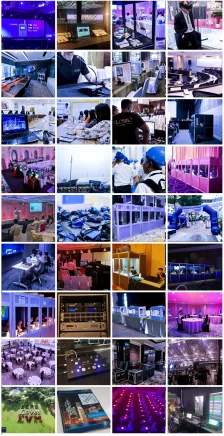
Virtual AGM Shareholder Meetings: Fair Multilingual Participation
As corporations continue to embrace digital transformation, Virtual AGM (Annual General Meeting) formats have emerged as a permanent feature of modern corporate governance. Originally adopted widely during the COVID-19 pandemic, these virtual shareholder meetings now play an important role in facilitating more accessible participation for global investors and stakeholders. However, the shift from traditional physical meetings to virtual forums has raised important questions about fairness, accessibility, and inclusivity — particularly regarding multilingual participation and equal opportunity for shareholder engagement. This article examines the importance of fair multilingual participation in virtual AGMs, the technical and regulatory frameworks that support it, the benefits and challenges of implementation, and best practices grounded in research and real-world governance trends.
The Evolution and Legal Basis of Virtual AGMs
Virtual AGMs became mainstream as companies across jurisdictions needed to comply with social distancing while maintaining statutory obligations to hold annual meetings. Regulatory authorities and government agencies in several regions updated corporate governance frameworks to permit virtual and hybrid formats. For example, the Organisation for Economic Cooperation and Development (OECD) notes that increasingly a majority of jurisdictions now allow virtual AGM meetings as part of their governance frameworks, with 45 out of 52 jurisdictions permitting fully virtual shareholder meetings contingent upon company articles of association and technology provisions. Hybrid formats are permitted in even more jurisdictions (49 out of 52), reflecting a global pivot toward flexible meeting structures that maintain shareholder rights across physical and digital spaces.OECD Corporate Governance Factbook 2025
In India, regulatory guidance has evolved to support virtual and hybrid AGMs via video conferencing and other audiovisual means. The Ministry of Corporate Affairs (MCA) issued General Circular No. 03/2025, reaffirming that companies may conduct AGMs and Extraordinary General Meetings (EGMs) through virtual platforms until further notice, providing continuity of digital engagement while ensuring compliance with statutory timelines under the Companies Act, 2013.𝐌𝐂𝐀 𝐔𝐩𝐝𝐚𝐭𝐞: 𝐕𝐢𝐫𝐭𝐮𝐚𝐥 𝐀𝐆𝐌𝐬/𝐄𝐆𝐌𝐬 𝐀𝐥𝐥𝐨𝐰𝐞𝐝 𝐓𝐢𝐥𝐥 𝐅𝐮𝐫𝐭𝐡𝐞𝐫 𝐎𝐫𝐝𝐞𝐫𝐬
These legal foundations are critical to ensuring that virtual AGMs are not merely technological substitutions for physical meetings but are recognised as legitimate mechanisms for shareholder participation, voting, and corporate accountability.
The Role of Virtual AGMs in Enhancing Accessibility
1. Removing Geographic and Economic Barriers
Virtual AGMs reduce logistical and financial costs for shareholders who would otherwise need to travel long distances, potentially incurring significant travel time and expense. Research by the OECD highlights that remote participation can increase shareholder accessibility, reducing both direct costs and ancillary burdens such as greenhouse gas emissions associated with travel. Policies and practices for remote participation in AGMs.This expanded access is especially beneficial for retail investors and institutional participants based in different time zones or regions with limited travel infrastructure.
2. Increasing Attendance and Engagement
Empirical evidence shows that virtual meetings have proliferated in many regions, with some markets such as the United States and the Middle East seeing virtual meetings account for over 50–70% of shareholder meetings between 2021–2023.Shareholder Meetings and Corporate Governance
This increase in virtual attendance has encouraged boards to consider how digital engagement can be aligned with authentic shareholder discourse, providing participation mechanisms such as two-way audiovisual communication, real-time polling, and live question-and-answer segments that mirror in-person interactions.
The Challenge of Multilingual Participation
1. Linguistic Diversity Among Shareholders
Global corporations often have shareholder bases that span multiple continents, cultures, and languages. Ensuring fair multilingual participation in a virtual AGM solution is not only a matter of convenience but one of equitable access to corporate governance. Without language support, shareholders whose primary language differs from the meeting’s default language (often English) may encounter barriers to understanding the agenda, engaging in discussions, or exercising voting rights.
Research in collaborative communication systems illustrates that language differences significantly affect participation and comprehension in virtual settings. A 2025 study on multilingual collaborative meetings identified the need for systems that enable communication in preferred languages to boost engagement and comprehension among participants from diverse linguistic backgrounds.Supporting Language Independent Communication and Comprehension to Enhance Contribution in Multilingual Collaborative Meetings
2. Technical Solutions for Language Inclusion
To address these challenges, modern virtual AGM platforms are increasingly incorporating real-time language interpretation, translation interfaces, and multilingual user experiences. Technical solutions include simultaneous language interpretation modules, text captioning, and language-localized interfaces that allow participants to interact in their preferred language. Research further suggests that advanced features like spatial audio rendering for real-time translation can improve user comprehension and reduce cognitive load, helping participants engage more fully in discussions regardless of their primary language.Spatial Audio Rendering for Real-Time Speech Translation in Virtual Meetings
Multilingual support needs to be embedded at every stage of the AGM process. This includes:
- Pre-meeting documentation: Providing notices, proxy materials, and agendas in multiple languages.
- Real-time interpretation and translation: Offering simultaneous translation of live speeches and discussions, along with captioning for real-time accessibility.
- Localized voting interfaces: Enabling shareholders to vote using language-specific instructions and clear navigation.
Equity, Fairness, and Regulatory Expectations
1. Ensuring Equivalent Participation Rights
Regulatory guidance in markets such as Australia emphasises that remote participants must have equivalent opportunities to engage in meetings as in-person attendees. This includes the right to ask questions, provide comments, and cast votes via secure digital mechanisms. Extending this principle to multilingual participation necessitates that language barriers do not create disparities in shareholders’ ability to exercise these rights.
Legal frameworks increasingly articulate the importance of technology that supports inclusive participation. For example, guidelines in Hong Kong’s Companies Ordinance require virtual meeting technology that permits shareholders to listen, speak, and vote without physical presence while maintaining robust language support where necessary.
2. Addressing Quality of Engagement
While increasing participation rates through virtual formats is a key advantage, research and governance commentary highlight the importance of substantive engagement. A Harvard Law School forum on shareholder meetings in 2025 noted that some virtual formats risk devolving into procedural routines if platforms do not facilitate genuine dialogue, deliberation, and Q&A exchange. Ensuring that language support functions extend across these interactive components is essential for meaningful multilingual engagement.Statement on Corporate Governance and Annual General Meetings in 2025
Best Practices for Fair Multilingual Participation
1. Strategic Pre-Meeting Planning
Achieving equitable multilingual participation begins with planning far in advance of the meeting date. This includes identifying the languages most prevalent among the shareholder base, translating materials accordingly, and ensuring that virtual AGM interpretation services or automated translation tools are tested for accuracy and reliability.
Good governance practice suggests that translations should be reviewed by subject matter experts fluent in relevant languages to minimise the risk of miscommunication. Shareholders must be informed about available language options well ahead of the meeting through multilingual notifications and registration interfaces.
2. Robust Technology Integration
Platforms enabling virtual AGMs must support the technical requirements of real-time multilingual participation. Features such as synchronized captions, simultaneous interpretation channels, and localized voting screens contribute to lowering the participation gap for non-native language speakers. The technology should also ensure high-quality audiovisual streams, as clarity directly impacts comprehension and engagement.
3. Post-Meeting Accessibility and Documentation
After the AGM, companies should retain and publish multilingual records of proceedings, including translated transcripts and summaries of voting outcomes. Providing these artifacts ensures transparency and allows shareholders who may have missed portions of the live meeting to review key decisions and discussions.
Summary of Virtual AGM Shareholder Meetings
The rise of Virtual AGM formats has substantially reshaped how shareholder meetings are conducted, offering unprecedented opportunities for inclusion and efficiency. However, ensuring fair multilingual participation remains a key governance challenge that requires intentional policy, robust technology, and thoughtful execution. As regulatory frameworks evolve and more companies adopt digital meeting formats, the integration of multilingual support stands as both a technical necessity and a governance imperative.
Improving multilingual inclusivity not only expands access but also strengthens shareholder engagement, reinforces corporate transparency, and aligns with global best practices in corporate governance. Through careful planning, advanced virtual technologies, and a commitment to equity, organisations can ensure that virtual AGMs fulfill their promise as inclusive, participatory forums for shareholder accountability and decision-making.

Rick Lee
Project Manager – Event Technology
With over 10 years of experience in event technology, Rick is an expert in integrating cutting-edge tech solutions for seamless event execution. His expertise includes Hybrid AGM setups, virtual AGM, audio-visual setups, interactive displays, and live-streaming technologies. Rick’s innovative approach ensures every event is technologically advanced and highly engaging.
YouTube Video on Virtual AGM
Contacts
Certification

Testimonials


Event Technology