Live Translation in International Conferences: Key Considerations
Live translation, or simultaneous interpretation, is crucial in international conferences where participants speak multiple languages. This process enables effective communication and ensures that information is accessible to all attendees regardless of their language. This article explores the key considerations for implementing live translation in international conferences, highlighting technological advancements, best practices, and how to address common challenges.
Key Considerations for Live Translation
1. Selection of Professional Translators
Accuracy and Subject Expertise: The effectiveness of live translation hinges on selecting skilled interpreters who are not only fluent in the required languages but also well-versed in the subject matter of the conference.
Factors to Consider for Interpreter Selection:
- Language Proficiency: Ensure interpreters are proficient in both the source and target languages. For instance, a conference involving English and Spanish will require interpreters fluent in both languages.
- Subject Matter Expertise: Interpreters should have expertise in the specific field of the conference, such as technology, law, or medicine. This familiarity helps in accurately translating specialized terminology.
- Experience in Live Interpretation: Experienced interpreters are adept at handling the fast-paced nature of live translation and managing on-the-spot adjustments.
2. Translation Technology and Equipment
Technical Infrastructure: The quality of translation depends significantly on the technology and equipment used. Proper setup ensures clarity and minimizes disruptions.
Key Translation Technology Components:
- Headsets and Microphones: High-fidelity, noise-canceling headsets and microphones are crucial for clear audio transmission. They help in reducing background noise and ensuring that interpreters can hear and convey information accurately.
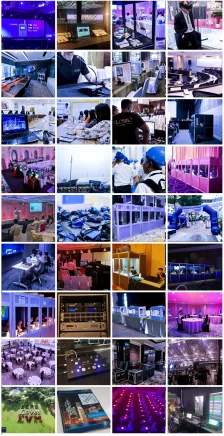
- Interpreter Booths: Soundproof booths are essential for minimizing external noise and providing a focused environment for interpreters. Booths should be ergonomically designed to support long hours of work.
- Translation Software: Software such as KUDO and Interprefy integrates with audio systems to provide real-time translations and assist interpreters with contextual information.
- Broadcasting Equipment: Reliable transmitters and receivers ensure that the translated content reaches the audience without delays or distortions. This includes systems that support multiple audio channels for different languages.
3. Language Requirements and Conference Demographics
Audience Analysis: Understanding the linguistic needs of the conference attendees is crucial for determining the scope of translation services.
Determining Language Needs:
- Pre-Conference Surveys: Conduct surveys to identify the languages spoken by attendees. This data helps in planning the number of interpreters and the languages required.
- Geographical Representation: For conferences with a global audience, consider the languages spoken by attendees from different regions to ensure comprehensive coverage.
4. Conference Format and Structure
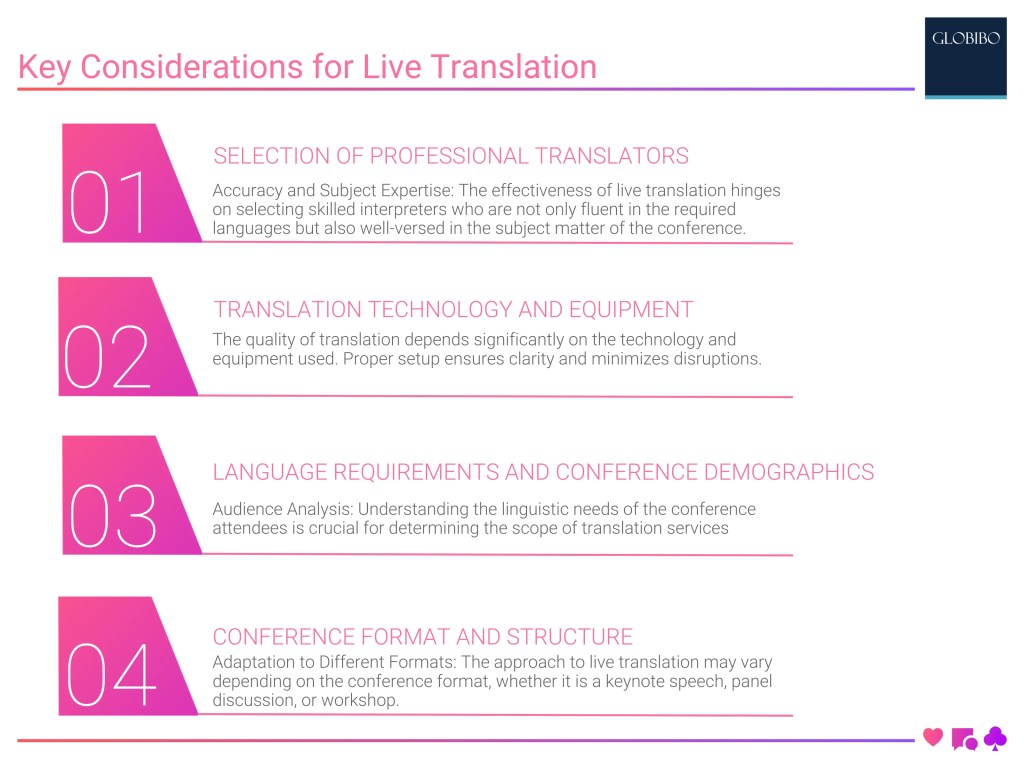
Adaptation to Different Formats: The approach to live translation may vary depending on the conference format, whether it is a keynote speech, panel discussion, or workshop.
Conference Formats and Translation Needs:
- Keynote Speeches: Typically require translation of formal presentations. Interpreters should receive the speech content in advance to prepare and ensure accuracy.
- Panel Discussions: Involve multiple speakers, necessitating coordination among interpreters to maintain consistency and quality.
- Workshops and Breakout Sessions: These sessions often involve interactive discussions. Interpreters must be able to adapt quickly to varying speaking speeds and participant interactions.
Pre-Conference Planning for Live Translation
- Language Needs Assessment:
- Conduct attendee surveys to determine required languages.
- Analyze regional and linguistic diversity to tailor translation services.
- Interpreter Recruitment:
- Hire interpreters with expertise in required languages and subject matter.
- Verify their credentials and experience to ensure high-quality interpretation.
- Translation Technology Selection:
- Invest in high-quality audio equipment and translation software.
- Test all technology components to ensure compatibility and functionality.
- Room Layout and Logistics:
- Set up interpreter booths with necessary technology.
- Plan for audio and visual connections between booths and the main venue.
- Multilingual Platform Integration:
- For hybrid or virtual events, integrate translation features into the event platform.
- Ensure the platform supports multiple languages and real-time interpretation.
Technology Enhancements in Live Translation
1. AI-Powered Translation Tools
Integration with Human Interpreters: AI tools enhance the efficiency and accuracy of live translation by providing real-time support to interpreters.
Features of AI Translation Tools:
- Terminology Databases: AI maintains and updates databases of industry-specific terms, assisting interpreters with accurate translations.
- Contextual Assistance: AI offers contextual suggestions based on the subject matter and previous translations.
- Real-Time Corrections: AI tools help in correcting errors and adapting translations based on speaker nuances.
2. Cloud-Based Translation Platforms
Remote Accessibility: Cloud platforms enable real-time access to interpreters and translation services from any location, supporting hybrid and virtual conferences.
Benefits of Cloud-Based Platforms:
- Remote Interpretation: Allows interpreters to work from different locations, facilitating global access to translation services.
- Scalability: Easily accommodates changes in the number of languages or interpreters required.
- Integration with Virtual Conferencing Tools: Provides seamless integration with virtual event platforms for simultaneous translation.
3. Voice Recognition and NLP
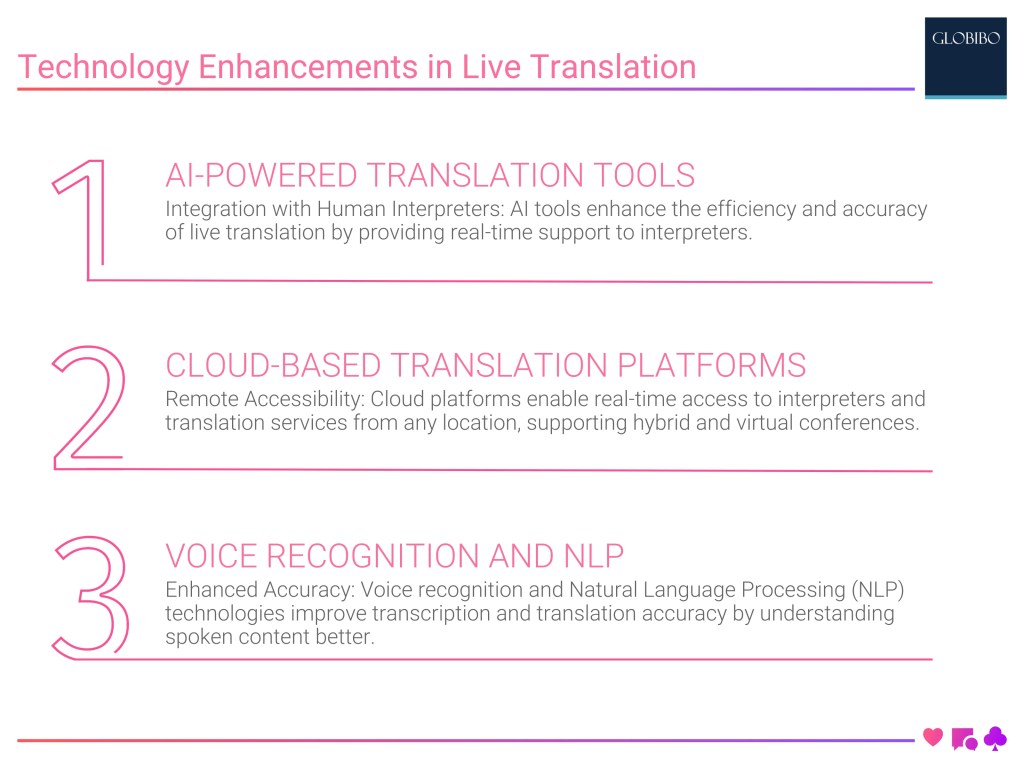
Enhanced Accuracy: Voice recognition and Natural Language Processing (NLP) technologies improve transcription and translation accuracy by understanding spoken content better.
Applications of Voice Recognition:
- Speech-to-Text Transcription: Converts spoken words into text, which can be reviewed and translated in real time.
- Jargon and Terminology Recognition: Identifies and translates specialized terms accurately.
- Real-Time Monitoring: Provides live updates and corrections to maintain translation quality.
Comparison of Live Translation Tools and Features
| Technology | Key Features | Use Case in Live Translation |
| AI-Powered Translation Tools | Terminology databases, contextual assistance, real-time corrections | Supports interpreters with term accuracy and context-specific suggestions |
| Cloud-Based Translation Platforms | Remote access, scalability, virtual event integration | Ideal for hybrid and virtual conferences, ensuring global accessibility |
| Voice Recognition & NLP | Speech-to-text transcription, jargon recognition, real-time monitoring | Enhances interpreter accuracy during complex discussions |
| Real-Time Translation Software | On-screen translation, speaker speech support | Useful for live captioning and supporting simultaneous interpretation |
Benefits of Live Translation in International Conferences
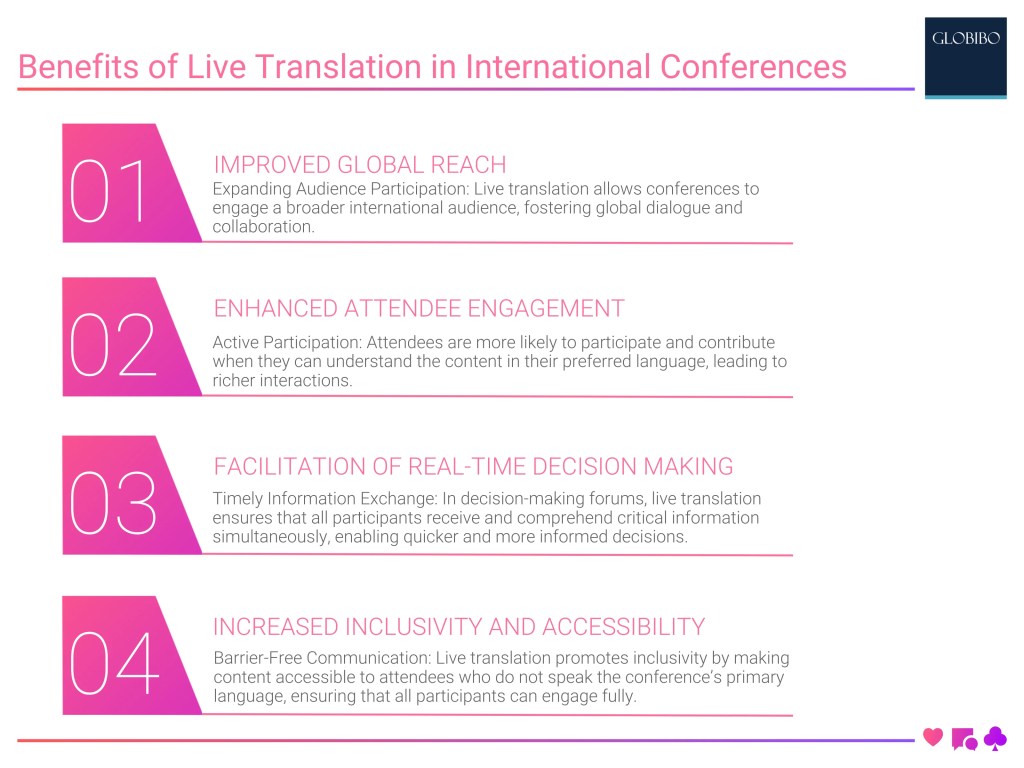
1. Improved Global Reach
Expanding Audience Participation: Live translation allows conferences to engage a broader international audience, fostering global dialogue and collaboration.
2. Enhanced Attendee Engagement
Active Participation: Attendees are more likely to participate and contribute when they can understand the content in their preferred language, leading to richer interactions.
3. Increased Inclusivity and Accessibility
Barrier-Free Communication: Live translation promotes inclusivity by making content accessible to attendees who do not speak the conference’s primary language, ensuring that all participants can engage fully.
4. Facilitation of Real-Time Decision Making
Timely Information Exchange: In decision-making forums, live translation ensures that all participants receive and comprehend critical information simultaneously, enabling quicker and more informed decisions.
Best Practices for Live Translation During Conferences
- Real-Time Monitoring of Translation Channels:
- Designate a technical team to oversee audio channels and address issues immediately.
- Implement quality control measures to monitor and adjust translation accuracy in real time.
- Multiple Backup Systems:
- Deploy redundant audio systems and backup interpreters to mitigate potential disruptions.
- Ensure backup systems are tested and functional prior to the conference.
- Clear Speaker Communication:
- Instruct speakers to articulate clearly and avoid excessive jargon.
- Provide interpreters with speaker notes and presentation materials well in advance.
- Incorporate AI Assistance for Complex Topics:
- Utilize AI tools to support interpreters with technical terms and contextual understanding.
- Regularly update AI databases with new terminology and industry developments.
- Provide Comprehensive Interpreter Training:
- Conduct pre-conference briefings to familiarize interpreters with the conference agenda and key topics.
- Offer practice sessions and mock interpretations to enhance performance and efficiency.
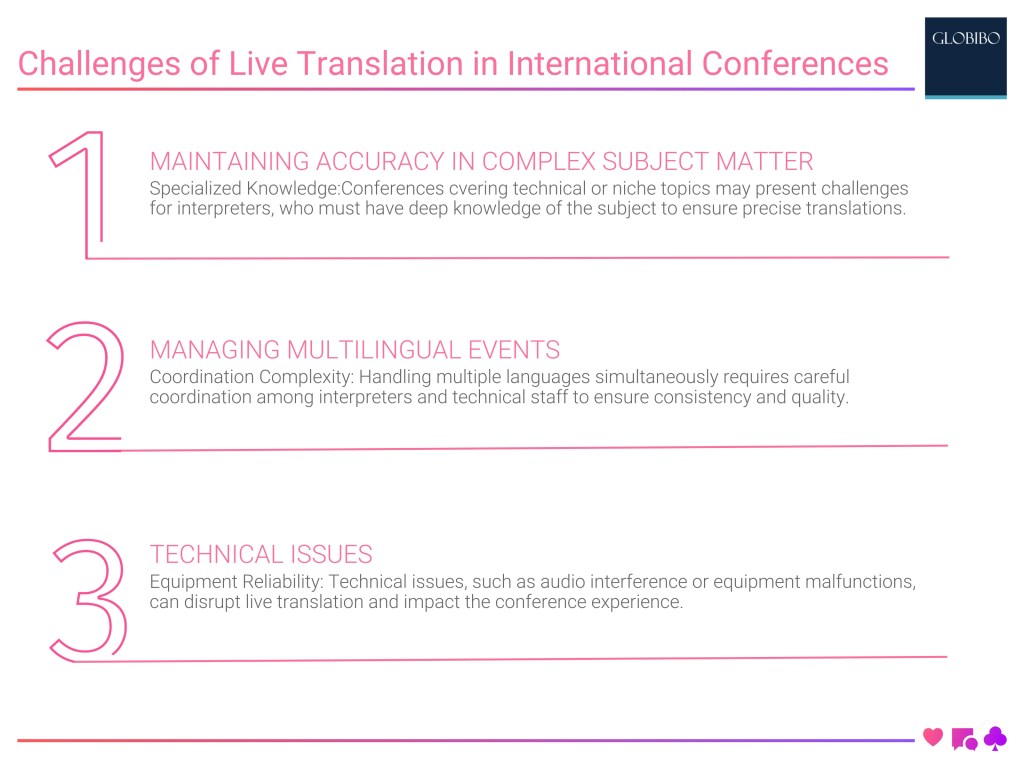
Challenges of Live Translation in International Conferences
1. Maintaining Accuracy in Complex Subject Matter
Specialized Knowledge: Conferences covering technical or niche topics may present challenges for interpreters, who must have deep knowledge of the subject to ensure precise translations.
2. Managing Multilingual Events
Coordination Complexity: Handling multiple languages simultaneously requires careful coordination among interpreters and technical staff to ensure consistency and quality.
3. Technical Issues
Equipment Reliability: Technical issues, such as audio interference or equipment malfunctions, can disrupt live translation and impact the conference experience.
4. Cultural Nuances and Idiomatic Expressions
Contextual Translation: Interpreters must navigate cultural differences and idiomatic expressions to provide translations that accurately convey the intended meaning.
Conclusion for Live Translation
Live translation is a critical component of successful international conferences, facilitating communication among participants from diverse linguistic backgrounds. By focusing on selecting skilled interpreters, investing in advanced technology, and adhering to best practices, conference organizers can ensure that live translation enhances the event experience. Embracing technological advancements, such as AI tools and cloud-based platforms, will further improve the accuracy and efficiency of live translation, making international conferences more accessible and inclusive.
Understanding and addressing the key considerations outlined in this article will help organizers deliver seamless and effective live translation, fostering global collaboration and engagement.
Academic References for Live Translation
- Translation, interpreting and new technologies
- [BOOK] Teaching Translation and Interpreting 2: Insights, aims and visions. Papers from the Second Language International Conference Elsinore, 1993
- [HTML] Interlingual live subtitling: the crossroads between translation, interpreting and accessibility
- Conference interpreter ethics
- The implications of translation for professional communication
- Conference interpreting
- Considerations for translation rights 2.0
- Crisis translation training challenges arising from new contexts of translation
- [HTML] 8th Annual International Translation Conference Panels 8th Annual International Translation Conference Panels
- Assessing the importance of audio/video synchronization for simultaneous translation of video sequences

Rick Lee
Project Manager – Event Technology
With over 10 years of experience in event technology, Rick is an expert in integrating cutting-edge tech solutions for seamless event execution. His expertise includes audio-visual setups, interactive displays, and live-streaming technologies. Rick’s innovative approach ensures every event is technologically advanced and highly engaging.
Youtube Video on Live Translation
Key Articles on Live Translation
- The Evolution of AI Transcription: From Manual to Automated Solutions
- Top AI Transcription Tools for Businesses: Features and Comparisons
- How AI Transcription Enhances Accessibility and Compliance in Media
- Accuracy in AI Transcription: Tips for Achieving the Best Results
- Live Translation in International Conferences: Key Considerations
- The Benefits of Live Translation for Virtual Events and Webinars
- Live Translation Services: How They Facilitate Cross-Cultural Communication
- How to Choose the Right Language Pair for Live Translation Services
Contacts
Certification

Testimonials


Event Technology