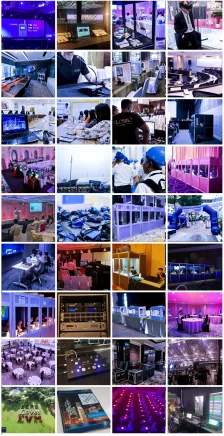
How Virtual & Hybrid Event Platforms support global and multilingual audiences
The rapid globalization of businesses, institutions, and professional communities has fundamentally transformed how events are planned and delivered. Conferences, product launches, shareholder meetings, training programs, and governmental sessions increasingly involve participants from multiple countries, cultures, and linguistic backgrounds. In this context, virtual and hybrid event platforms have evolved from simple streaming tools into sophisticated digital ecosystems designed to support global and multilingual audiences at scale.
Modern virtual and hybrid event platforms are no longer judged solely by their ability to broadcast content. Instead, their true value lies in how effectively they enable inclusive communication, linguistic accessibility, cultural adaptability, and seamless user experiences for geographically dispersed participants.
The Rise of Global and Multilingual Events
Globalization and remote collaboration have significantly increased the demand for multilingual event environments. Enterprises now host events where attendees may speak dozens of languages and connect from multiple time zones. Regulatory requirements, inclusivity standards, and user expectations further amplify the need for accessible, language-agnostic digital experiences.
Virtual and hybrid event platforms address these challenges by integrating language services, scalable infrastructure, and intelligent content delivery mechanisms. When implemented correctly, these platforms eliminate linguistic barriers while preserving the quality, security, and interactivity expected in professional events.
Multilingual Content Delivery Architecture
At the core of multilingual event support lies a robust content delivery architecture. Virtual and hybrid platforms must manage multiple audio, video, and text streams simultaneously without compromising latency or quality.
Key Architectural Components
- Multi-Channel Audio Streaming
Platforms support parallel audio channels for different languages, enabling participants to select their preferred language in real time. This architecture is critical for live interpretation and multilingual presentations.
- Low-Latency Streaming Protocols
Advanced streaming protocols minimize delay between speakers, interpreters, and attendees, ensuring synchronized communication across regions.
- Scalable Cloud Infrastructure
Cloud-native architectures dynamically allocate resources based on audience size, language channels, and geographic distribution.
This infrastructure ensures that global participants experience consistent performance regardless of location or language preference.
Integrated Interpretation and Language Support
One of the most critical features of global-ready event platforms is their ability to integrate professional language support services directly into the event workflow.
Simultaneous and Consecutive Interpretation
Virtual and hybrid platforms facilitate both simultaneous and consecutive interpretation by offering:
- Dedicated interpreter consoles
- Audio input and output routing
- Role-based access controls for interpreters and moderators
- Language channel management dashboards
These capabilities allow interpreters to deliver real-time translations without disrupting the event flow, closely replicating traditional in-person interpretation environments.
Real-Time Captioning and Subtitling
Automated and human-assisted captioning services enhance accessibility and comprehension for multilingual audiences. Platforms typically support:
- Live captions in multiple languages
- AI-assisted speech recognition with human quality control
- Customizable subtitle placement and formatting
This functionality is particularly valuable for participants with hearing impairments or those attending events in non-native languages.
Localization of User Interfaces
Supporting global audiences extends beyond spoken language. User interface localization plays a critical role in ensuring usability and engagement.
Interface Localization Capabilities
Modern event platforms offer:
- Multi-language user interfaces (UI)
- Region-specific date, time, and number formats
- Language-aware navigation menus and labels
- Localized onboarding instructions and help resources
By dynamically adapting the interface language based on user preferences or browser settings, platforms reduce friction and improve adoption among international attendees.
Time Zone and Regional Accessibility Management
Global events must accommodate participants across vastly different time zones. Virtual and hybrid event platforms address this challenge through intelligent scheduling and content availability features.
Time Zone Optimization Features
- Automatic time zone detection and conversion
- Personalized agendas adjusted to the attendees’ local time
- On-demand session playback for asynchronous participation
- Region-based notifications and reminders
These capabilities ensure that language accessibility is complemented by temporal accessibility, enabling meaningful participation regardless of geographic location.
Cultural Sensitivity and Customization
Effective multilingual communication is inseparable from cultural awareness. Advanced event platforms provide tools that allow organizers to tailor content and interactions to diverse cultural contexts.
Cultural Adaptation Tools
- Region-specific branding and design customization
- Flexible communication styles for different markets
- Moderation tools to manage culturally sensitive discussions
- Configurable engagement formats (Q&A, polls, chat behavior)
By enabling cultural customization, platforms help global audiences feel represented and respected, which directly improves engagement and trust.
AI-Driven Language Technologies
Artificial intelligence has become a key enabler of multilingual scalability in virtual and hybrid events. While human language professionals remain essential for accuracy and nuance, AI technologies significantly enhance efficiency.
AI Applications in Multilingual Events
- Automated speech recognition for live transcription
- AI-powered real-time translation for chat and Q&A
- Language detection and routing for participant messages
- Content tagging and indexing across languages
When combined with human oversight, AI allows platforms to support a larger number of languages and participants without proportional increases in cost or complexity.
Secure and Compliant Global Communication
Global and multilingual events often involve sensitive corporate, financial, or governmental information. Virtual and hybrid event platforms must therefore adhere to stringent security and compliance standards.
Security Considerations
- End-to-end encryption for audio, video, and text
- Role-based access for speakers, interpreters, and attendees
- Secure authentication and identity verification
- Data residency and regional compliance controls
These measures ensure that language accessibility does not compromise confidentiality or regulatory compliance.
Engagement Tools for Multilingual Interaction
Audience engagement is a key success metric for global events. Virtual and hybrid platforms offer multilingual engagement tools that encourage participation across language barriers.
Multilingual Engagement Features
- Language-specific chat rooms and discussion threads
- Translated live polls and surveys
- Multilingual Q&A moderation
- Cross-language networking features
These tools foster inclusive interaction, allowing participants to engage comfortably in their preferred language while remaining part of a unified event experience.
Analytics and Performance Measurement Across Languages
Understanding how different language groups interact with event content is essential for continuous improvement. Advanced platforms provide granular analytics segmented by language and region.
Multilingual Analytics Capabilities
- Attendance and engagement metrics by language
- Session performance across regions
- Content consumption patterns for localized materials
- Feedback analysis segmented by linguistic group
These insights enable organizers to optimize future events, refine language strategies, and improve audience satisfaction on a global scale.
Future Outlook: The Evolution of Global Event Platforms
As global collaboration continues to expand, virtual and hybrid event platforms will further integrate advanced language technologies, immersive environments, and intelligent automation. Emerging trends include:
- AI-assisted real-time multilingual moderation
- Immersive virtual spaces with a language-adaptive environment
- Deeper integration of professional interpretation workflows
- Enhanced personalization based on linguistic and cultural preferences
These advancements will push platforms beyond simple accessibility, transforming them into truly global communication ecosystems.
Summary of Virtual & Hybrid Event Platforms
Virtual and hybrid event platforms have become essential enablers of global and multilingual communication. By combining scalable infrastructure, integrated language services, localized user experiences, and advanced analytics, these platforms empower organizations to engage diverse audiences without linguistic or geographic limitations.
For enterprises, institutions, and event organizers operating in a global environment, investing in a platform that prioritizes multilingual support is no longer optional—it is a strategic necessity. As technology continues to evolve, the platforms that succeed will be those that place inclusivity, accessibility, and seamless communication at the core of their design.
Academic References for Virtual & Hybrid Event Platforms
- Planning virtual and hybrid events: steps to improve inclusion and accessibility
- [PDF] The Future of Virtual Events: Designing Immersive Experiences for Remote Attendees
- From hybrid events to the next generation-interactive virtual events: Viewed from three different stakeholders’ point of view
- Technological Innovation in Tourism and Events industry: A hybrid future of Events
- Multilingualism in cyberspace: Conceptualising the virtual linguistic landscape
- Geo-spatial hypertext in virtual reality: mapping and navigating global news event spaces
- [HTML] Hybrid events as a sustainable educational approach for higher education
- Digital Language Trends: How Technology is Shaping Multilingualism
- [BOOK] Research genres across languages: Multilingual communication online
- Multilingualism, diaspora, and the Internet: Codes and identities on German‐based diaspora websites1
Contacts
Certification

Testimonials


Event Technology